

“Woah! They’re in trouble…!” I looked up to see a mountain of a wave racing in towards the northwest tip of Robben Island. A lone double surfski turned to meet it, the crew paddling frantically. Up, up, punch through the feathering crest… Phew, they were safe, but what about us?
Additional Info
-
Content Part 2
Strong finish
As for us, fortified by the gels (what DO they put in those things?), we found our rhythm again and started to reel in some of the other mid-packers, finally reaching Nikki and Kim, whose lack of training was beginning to tell.
Not long after we passed them, their voices faded into silence. What could have happened? Were they sneaking up on us? Had they really hit the wall? Fearing that they’d put their race faces on, we put the hammer down. Gasping our last, we finally finished in 2:26, 60th overall out of 126 doubles and just over two minutes ahead of our rivals.
Last Words
"It was unbelievably cool to be able to paddle around Robben Island on Freedom Day," said Hank McGregor. "We are just about the only sport that can enjoy the privilege of going around Robben Island as a way to celebrate Nelson Mandela's legacy on Freedom Day and it was very special for all of us."
(On our particular victory, Nikki Mocke had the final word, “We’ll definitely see you next year. Be afraid!”)
A truly great day out.
We even made it onto the national news:
SUMMARY OF RESULTS - 2019 FREEDOM PADDLE
MEN
- Andy Birkett/Han McGregor
- Jasper Mocke/Nick Notten
- Stu MacLaren/Kenny Rice
- Dawid Mocke/Josh Fenn
- Barry Lewin/Bevan Manson
WOMEN
- Hayley Nixon/Michelle Burn
- Sabina Lawrie/Bridgitte Hartley
- Bianca Beavitt/Melanie van Niekerk
- Nikki Mocke/Kim van Gysen
- Jess Pollock/Angie Austin
More information can be found at https://freedompaddle.co.za/
“This was one of the toughest races I’ve done in a long time!”. When a campaigner like Oscar Chalupsky says that, you know the conditions must have been challenging. Chalupsky had been in New Zealand for a two-week trip, culminating in the Vaikobi King and Queen of the Harbour race in Auckland.
Tough Course
Given the forecast 20kt Northeaster, the race directors chose a 23km route known to the locals as the “Gnarly Northerner” from Whangaparaoa Peninsula on Auckland’s north shore to finish at Takapuna Boating Club.
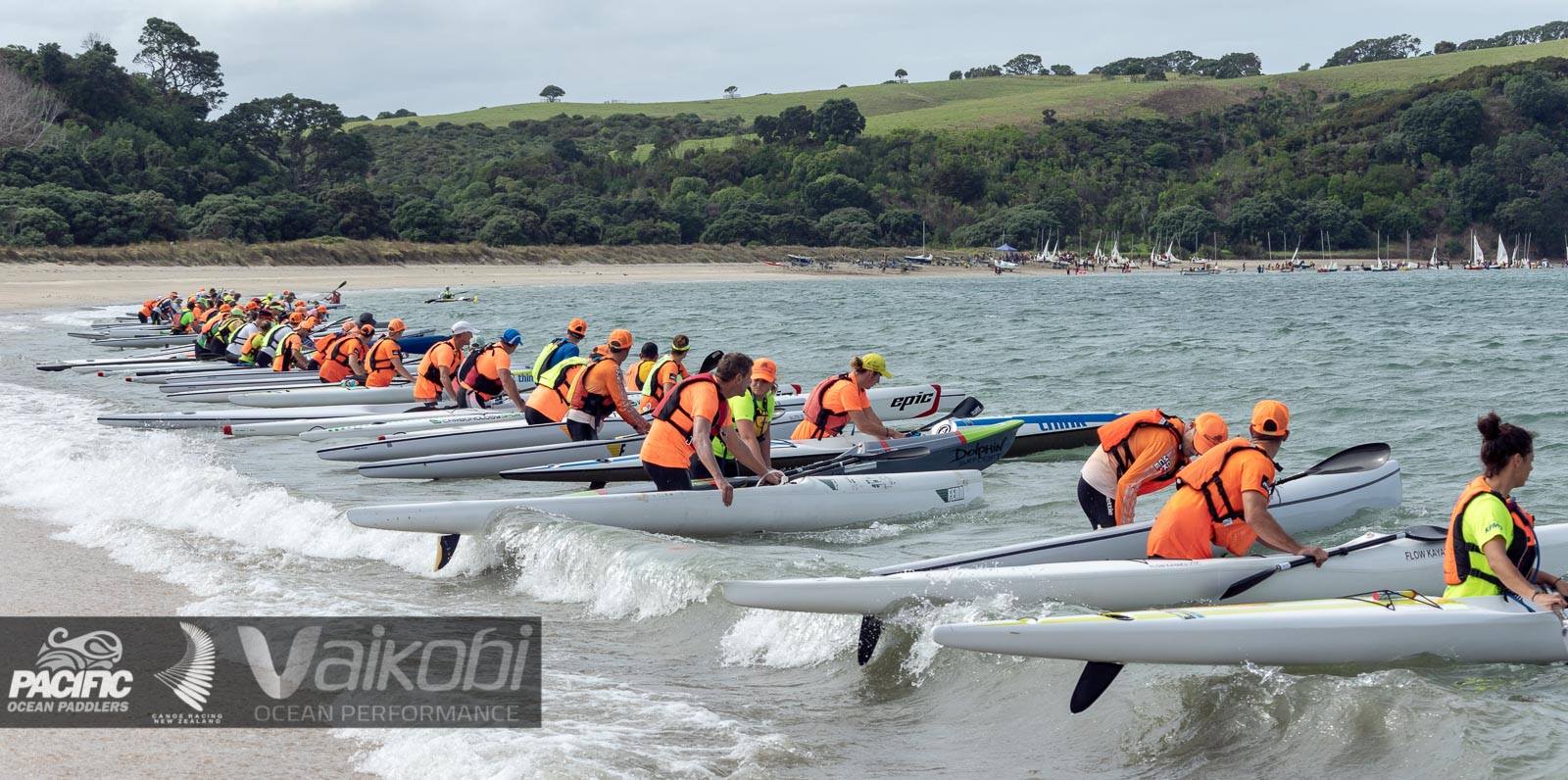
The first leg of the course was a flat-out 3km grind into the wind and waves, and any thought of an easy downwind was quickly dashed as the paddlers rounded the buoy.
“Once we turned, I thought it would be an easy downwind,” said Chalupsky. “But I was mistaken!” In fact they were faced with almost side-on wind and waves, extremely testing, technical conditions.
Looking at some of the race tracks on Strava, you can see how they were catching runs by turning right and then working left to stay on course for Takapuna.
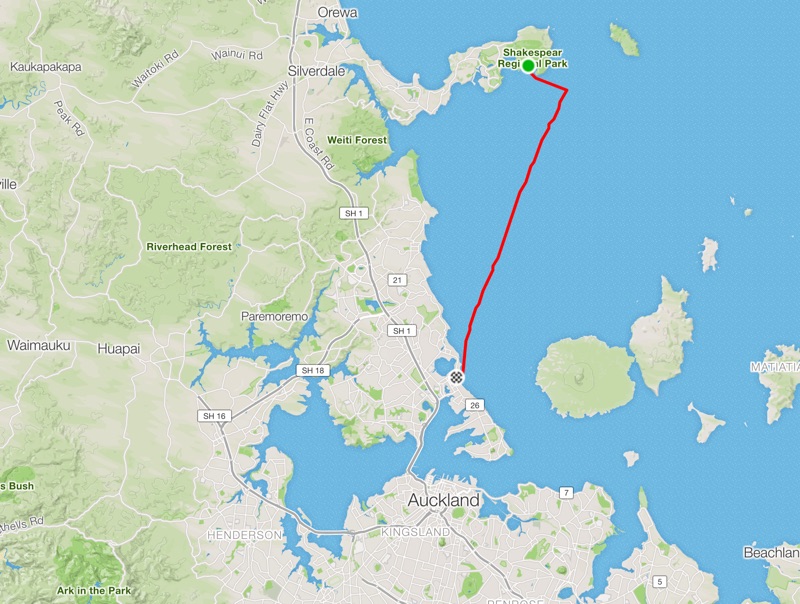
Walking away with it
Defending champion Andy Mowlem reached the turn-buoy first and simply paddled away from the rest of the field, finishing in 1:34:54, a massive 3 ½ minutes ahead of second placed Sam Mayhew.
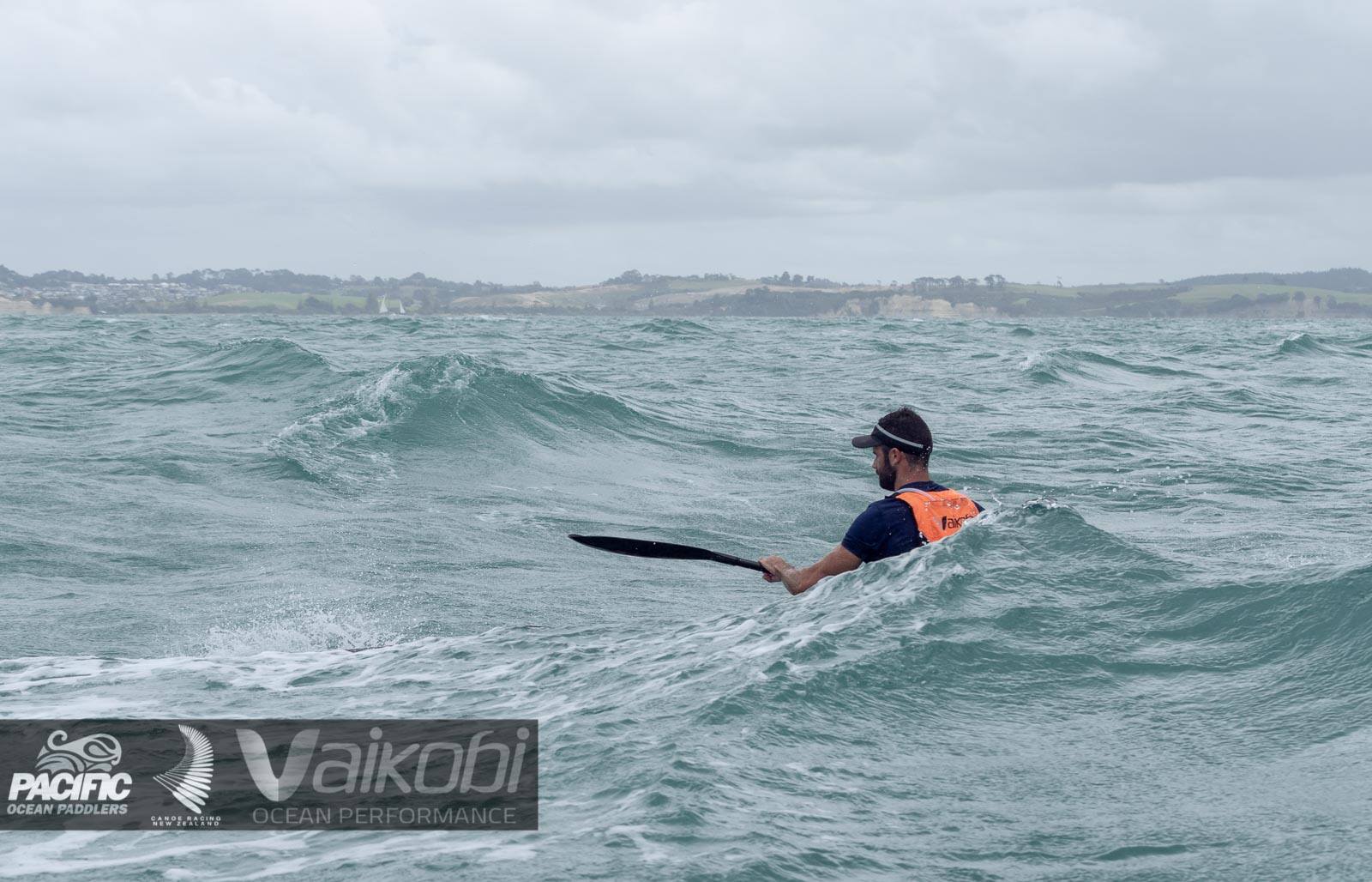
Andy Mowlem hurtles downwind...
The real race was for second place; a tremendous dice between Mayhew, Toby Brooke and Oscar Chalupsky.
Takapuna club member Mayhew, with the benefit of local knowledge, took an inside line to the final turn and pipped Brooke by seven seconds with hard charging Chalupsky (“you can see from my heart rate that I pushed my hardest in a long while!”) just two seconds behind.
"Finally cracked the podium!" said an elated Mayhew on Facebook. "2nd place at the King of the harbour which is also the NZ Ocean Ski Nationals!"
"6 years ago I started falling out of a SLS ski for the first time," he added, "and later that year I did my first king of the harbour. I was near last but I was hooked..."
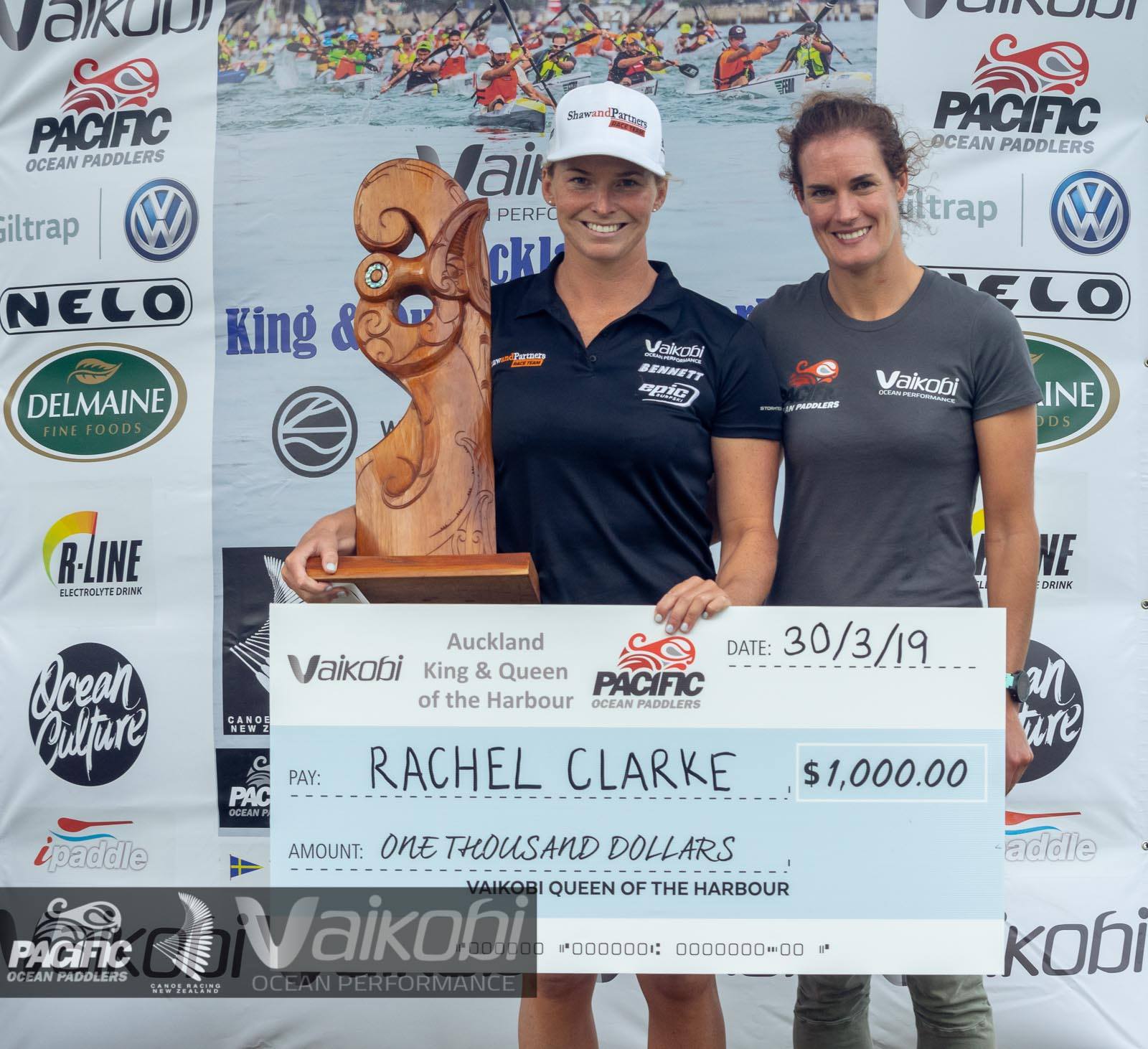
In the women’s race, Rachel Clarke dominated, coming in 7th overall in the single skis with Rebecca Cole and Danika Mowlem coming in 2nd and 3rd respectively.
“VERY technical conditions out there today,” said Clarke, “… which I loved!” It was Clarke's seventh win in this iconic event.
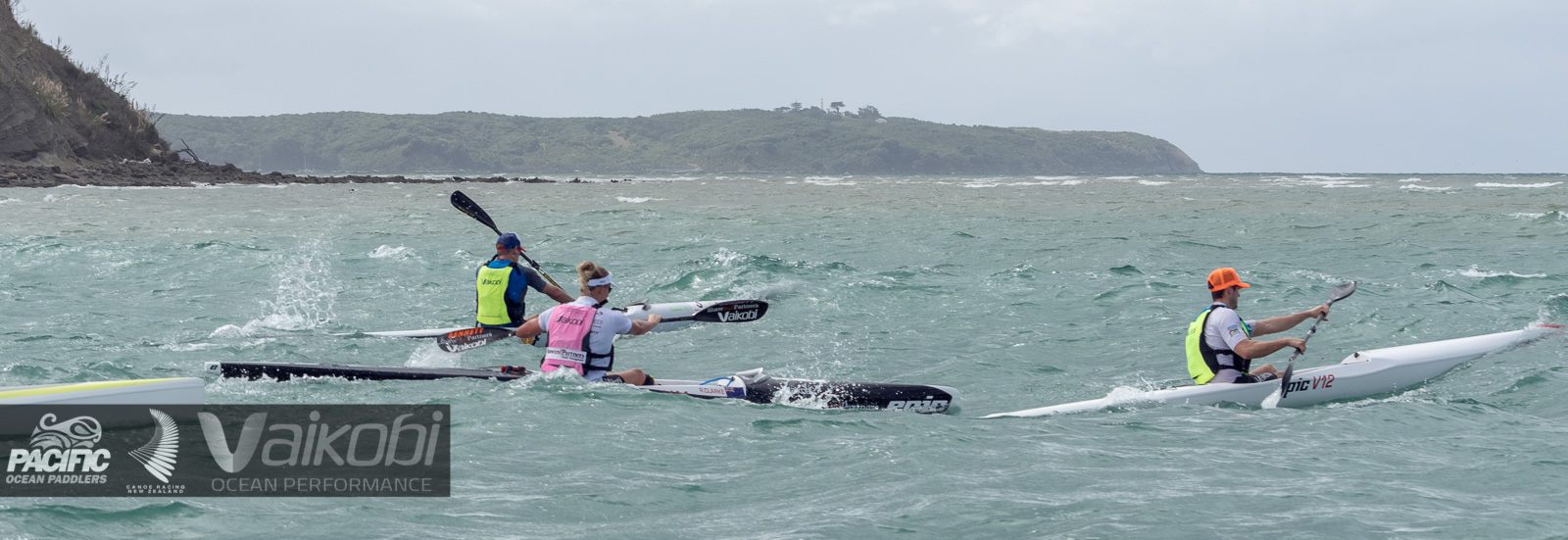
Rachel Clarke heads out into the chop at the start...
Additional Info
-
Content Part 2
Canoe Racing New Zealand
Two major announcements were made at prize-giving by CRNZ’s CEO Tom Ashley:
- A new surfski racing series named after KQoH founder Darcy Price was announced. 5-6 races around New Zealand incorporated selections for the ICF World Championships.
- The next Vaikobi King and Queen of the Harbour will be held on November 30, 2019.
Results Summary - Surfski (Oceanski)
(Click here for the full results)
Women
- Rachel Clarke (NZ) 1:41:27
- Rebecca Cole (NZ) 1:50:41
- Danika Mowlem (NZ) 1:59:25
- Lisa Gras (FRA) 2:05:40
- Anouk Strohmann (FRA) 2:12:20
Men
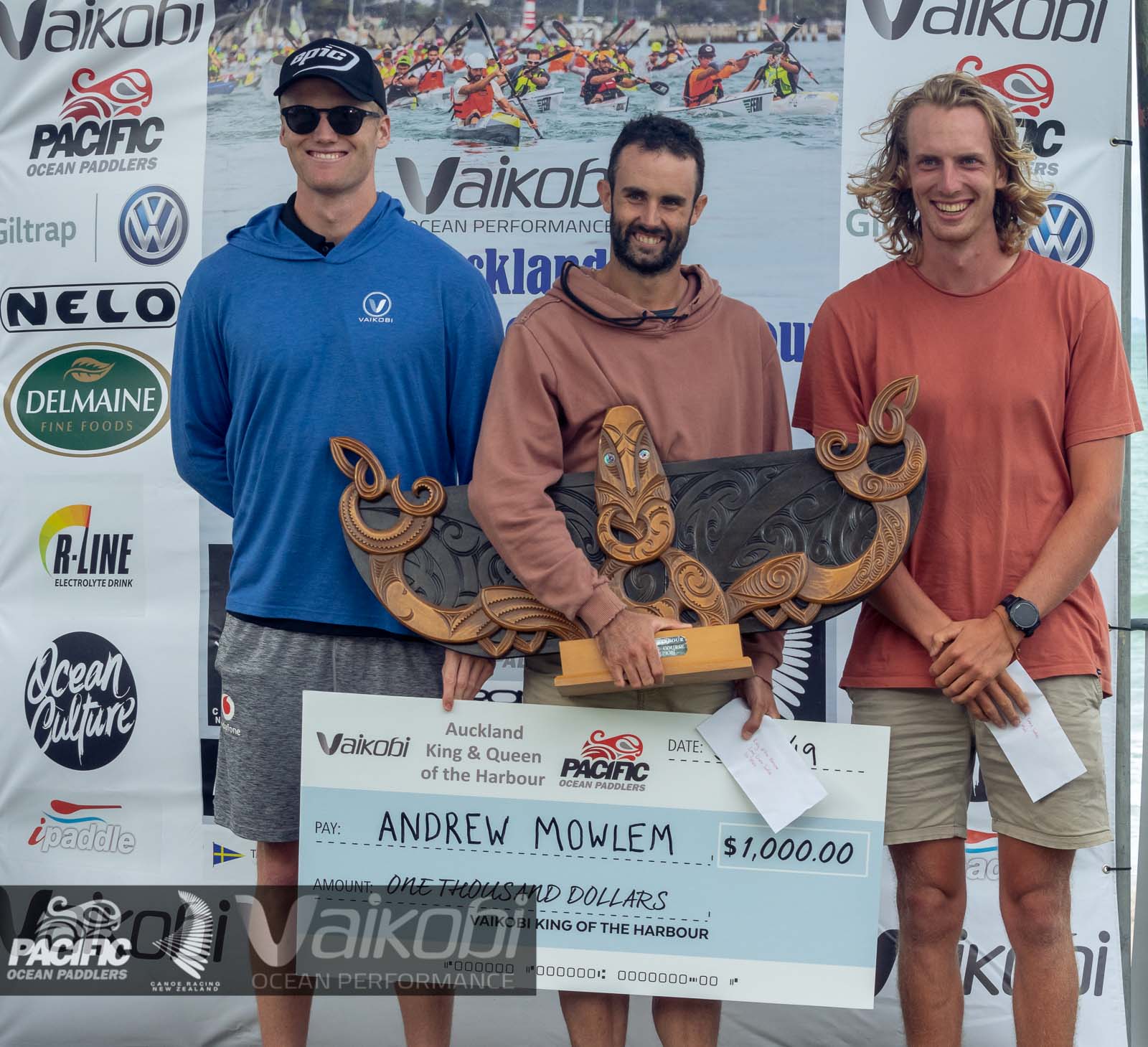
- Andrew Mowlem (NZ) 1:34:54
- Sam Mayhew (NZ) 1:36:59
- Tobias Brooke (NZ) 1:38:33
- Oscar Chalupsky (POR) 1:38:35
- Samuel Newlands (NZ) 1:40:38
My opposition surged past me on the last lap of the Seadog race in Fish Hoek. In desperation, I steered to hook onto his side wash… To my surprise the XT S accelerated instantly, and I sat there with little effort riding the wash for the rest of the leg.
Additional Info
-
Content Part 2
First Paddle - Miller’s Run
My first paddle in the boat was a classic Miller’s Run. The conditions included a brisk 22-27kt southeaster that had kicked up some good-sized chop. As usual, the sea was confused for the few km, waves running in several directions, but it straightened up towards the lighthouse and it became easier to ride the runs.
My overall impressions weren’t great: I found the seat excruciating and ended up with a large raw patch on my coccyx. Worse, the steering was sluggish; the boat didn’t feel responsive to the rudder, slewed easily off course and I broached a couple of times to my intense frustration.
On the other hand, my paddling buddy had started just ahead of me and I ended up beating him to the beach and I took that as a good sign.
Any Miller’s Run below 50min we consider acceptable – and I did 49:51.
But I really didn’t enjoy the paddle and was faced with living with a discomfited bum for the next few days.
Tweaking the Boat
I added a bum pad in an effort to make the seat more comfortable. In fairness to Fenn, I should add that I apparently have a particularly boney backside; the XT S has been used by two other paddlers while I’ve had it and both had no complaints about the seat!
Orka Paddles in Cape Town provided me with one of their big elliptical rudders to replace the standard Fenn-supplied item.
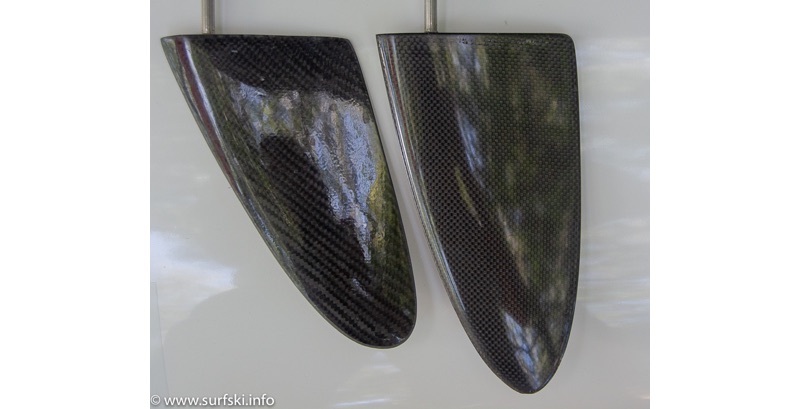
The elliptical rudder makes a perceptible improvement to the handling of the Fenn Mako XT S
(Standard Fenn rudder to the left)
Reverse Miller’s Run
An out-of-season northwester arrived, and the Miller’s Run taxi was operating – just in the opposite direction to normal. (This is one of the reasons that Cape Town is such a downwind mecca; 90% of the time the wind is blowing either southeast or northwest and the downwind conditions are fun either way.)
Bizarrely – we hardly ever get proper swell in False Bay – a long set of about ten big dumpers arrived just as my buddy and I left the beach and we sat there popping over one foamy after another before we finally got the break we needed to sprint out to the backline.
The run was a classic “reverse”: flat water giving way to small chop, with the first ridable runs a couple of km in and finally clean, fun, linkable runs for the last 5km from the lighthouse to Miller’s Point.
The bum pad wasn’t quite in the right place and I was still in some pain – but the surfski tracked (i.e. kept a straight line) better and responded better to steering.
My buddy on this occasion normally beats me quite handily and as soon as we got into the bigger runs, he put the hammer down and pulled away from me – as usual.
But I could maneuver the boat, it didn’t nose-dive, and I had a ball.
A Hectic Miller’s Run
Next up, a few days later, I took the XT S on a much bigger, bouncier Miller’s Run, this time accompanied by a couple of buddies who were paddling: a Swordfish, a Swordfish S and an Elite.
Conditions
The wind was blowing 20-27kt at Fish Hoek – not outrageous, but enough to make it a “good” run – and a fair-sized swell was wrapping into the bay.
But sometimes the wind blows at such an angle that it rebounds off the mountains and for the first 2-3km it gusts side-on, directly offshore. This was one of those days, and every time I caught a run, I couldn’t see a thing as the spray blew straight into my face.
Half way to the Roman Rock lighthouse, the wind straightened up – but the waves were still wild, sets moving in all directions, making it difficult to link sequences of runs.
Easy to catch runs
I noticed however that the XT S seems to catch runs very readily; although the confused chop prevented me from making many long sequences, it was easy to catch run after run and I ended up beating all three of my companions to the beach.
The XT S is perceptibly more stable than the Swordfish S – and that helped too in that I could make the necessary power strokes to accelerate onto the runs without being compromised by any feeling of instability.
As I came into the beach, a monster wave picked up behind me; on the video there’s a muffled “bloody hell!” as the back of the ski rose… but never fear, she tracked straight, and I had a great ride into the sand.
So far so good – the XT S ticks all the boxes as far as downwind is concerned – but how would it feel on the flat, especially in a flat race?
(And although my backside wasn’t raw, it still felt bruised! I still hadn’t cracked the position of the bum pad.)
Seadog Race
Next up was Fish Hoek’s favorite Friday evening activity: the “never cancelled” Seadog Race.
And conditions were flat. A light northwester was blowing offshore, and the 5-lap course would be an honest grind. A number of my marks were paddling, and it would be obvious if the stable hull were a real disadvantage.
I ended up more or less in my usual position in the results coming in 19th overall out of 47 skis.
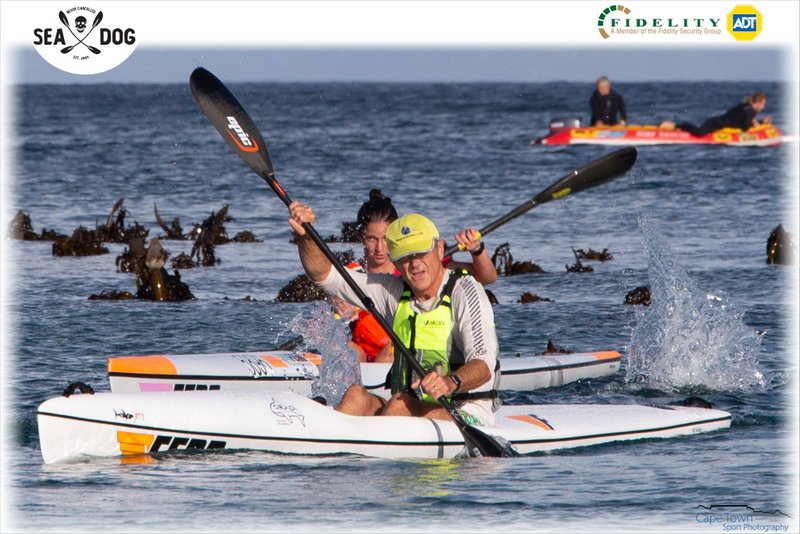
Flat conditions at the Seadog Race in Fish Hoek, Cape Town
My impressions:
- I found it very easy to ride slip on surfskis around me; on one leg, a stronger paddler came steaming past on a Swordfish S, but I was able to hop on his side-slip and together we dropped the group.
- On the “downwind” legs, the ski seemed to accelerate onto the tiny waves.
- But I found it difficult to accelerate when trying to catch the someone ahead of me, as though the drag on the hull increases rapidly limiting my top speed (but hey, as I kept reminding myself, this wasn’t designed to be the fastest boat on the planet.)
- With the bum pad higher up the back of the seat, the pain in my butt wasn’t nearly as severe!
Mellow Miller’s
My final paddle in the boat was a Miller’s run in much more benign conditions: 18-22kt with small, clean runs.
Impressions:
- The boat picks up runs really well.
- Although it’s not as nimble as the Swordfish, the big rudder keeps it straight (enough) and gives it sufficient maneuverability to create sequences.
- If you lean back and keep the nose up, you can extend the glide, and, choosing carefully, you can sometimes bounce the next wave. If you choose badly, it comes to a dead stop... (Again, all boats will wallow if you apply poor technique, but it’s more difficult to power over the XT S over the next wave than the Swordfish, for example.)
- No real propensity to broach (although, just like any other boat, if you’re moving too slowly when a wave arrives, of course you’ll slew off course).
I finished 2min ahead of my buddy; about the usual distance. I’m not sure that I’d have been much further ahead if I’d been on the Swordfish – and I really can’t say that I was at all frustrated by the boat.
Matching the Criteria
So, how does the Fenn XT S shape up in terms of the criteria that I listed?
Downwind
- I didn’t like the handling of the boat with the standard rudder; I felt that the steering was very insensitive. However, when fitted with a bigger elliptical rudder, I found the steering more effective – but without sacrificing any stability (sometimes a bigger rudder can make a boat feel less stable.) The bigger rudder improved the tracking too.
- I was able to accelerate easily onto both big and small waves. Although some water came into the cockpit, it drained reasonably well and at my weight (80kg), it was reasonably dry. I might put a wave deflector on the boat, but I wouldn’t say that was an absolute necessity.
- The angle of the back of the seat makes it comfortable to lean back and keep the nose up when going down big faces.
- Overall, I think this is a fun and capable boat for doing downwinds.
Flat-water
- While acknowledging that a sample of one race is hardly conclusive, I was pleasantly surprised by my result in the Seadog race that I did in flat, offshore-wind conditions. It definitely wasn’t an embarrassing result!
- And I was pleasantly surprised by how easy it was to catch tiny bumps – including the wakes of other surfskis in the race. Slip-riding is a joy in this boat.
- I struggled to accelerate the boat relative to the Swordfish S when trying to put in an interval to catch the next group, but one would expect hull-drag to ramp up faster on a wider boat.
- It doesn’t turn as sharply as the Swordfish S, even with the larger rudder. But it’s not as bad as some other boats I’ve paddled, either.
-
Content Part 3
Would I buy this boat?
Try the seat first!
I find the seat excruciating, but no-one else who sat in the boat understood what I was on about – so I’ve chalked that up to my own particular peculiar bum-shape.
When I discussed this with Travis Smith at Fenn Kayaks, he told me that they changed the shape of the seat to prevent the dead-leg syndrome reported by paddlers of the older skis. The new shape seems to have fixed that problem – but left the few strange-bum folks like me the less comfortable!
Bum seat aside...
For me, it’s a fun downwind boat and I even enjoyed racing it on flat water. So, if in my old age (which isn’t so far off now!), I lose any of my current ability to balance, I’d definitely consider it as a replacement for my beloved Swordfish S.
And it is stable: anyone wanting to move from a Blue-fin, but who finds the Swordfish a little too twitchy, should definitely give the XT S a go.
Definitely works for some
My buddy Dale Lippstreu, 64, has owned many boats ranging from a black carbon V10 to Red7 Surf 70 Pro to the old-style Swordfish to the Think Evo II.
A recent bad experience with remounting on a downwind combined with growing discomfort with paddling out into the wind and waves at the beginning of the Miller’s Run convinced him that he needed more “stability before ability” and after paddling the demo XT S, he ordered a 12,5kg Hybrid model.
As I watched through the zoom lens it felt as though I was right there: Jasper Mocke’s surfski hung for a moment on the precipice and then plunged down the face of a massive wave. He hit a smaller cross chop, went airborne and then plunged down, the nose of his ski diving into the green water; he disappeared in an explosion of spray and then the boat shot up without him, spinning, into the air.
Additional Info
-
Content Part 2
Worried about breaking the boat?
Yes, breaking the boat is always a concern, but you know it’s not a complete cowboy mission out there!
I’m pretty calculated, I line the take-off up on the mountain; I’ve got two spots on the mountain to align the take-off on, I know exactly where those little boiler rocks are, and I always keep the ski straight or slightly right of straight so that if it nose-dives or something happens, the nose of the ski always bails to the right. You’d have seen with my nose-dives! It always goes to the shoulder of the wave.
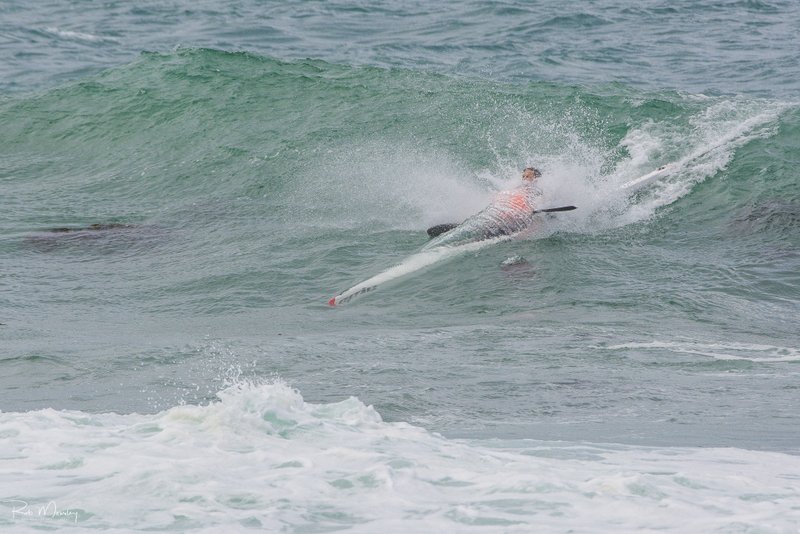
Make like a submarine!
If I nose-dive or wipe out, I never try and hang on to the boat; I just let the boat go where it goes with the wave, because it’s when you try and hang on to something or you try and stay on the boat too long is when the admin comes!
If you know where the hard obstacles are, and you avoid them, and you get out the boat as soon as you see something’s going to go wrong, then you should be good. Plus, the construction of the Ultras is a mixture of carbon and Kevlar, so it’s very, very durable. It’s probably the most durable that I’ve ever paddled – so I’ve got lots of confidence in the construction of the boat.
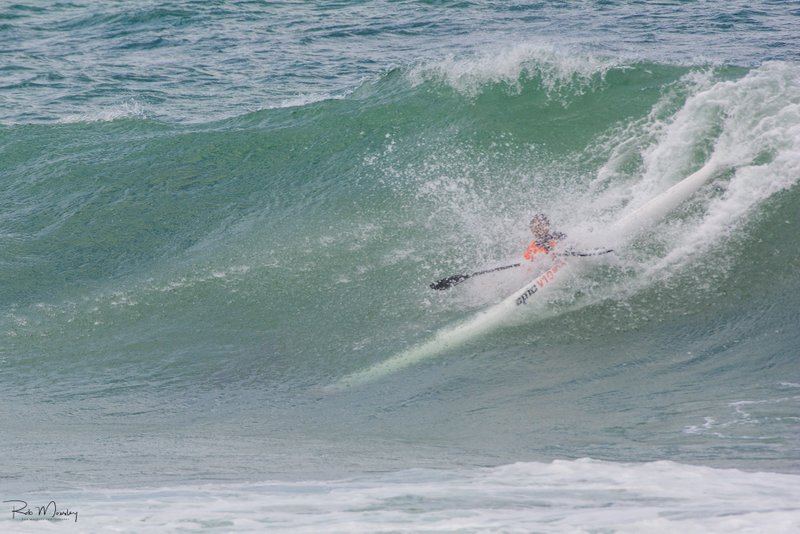
Going...
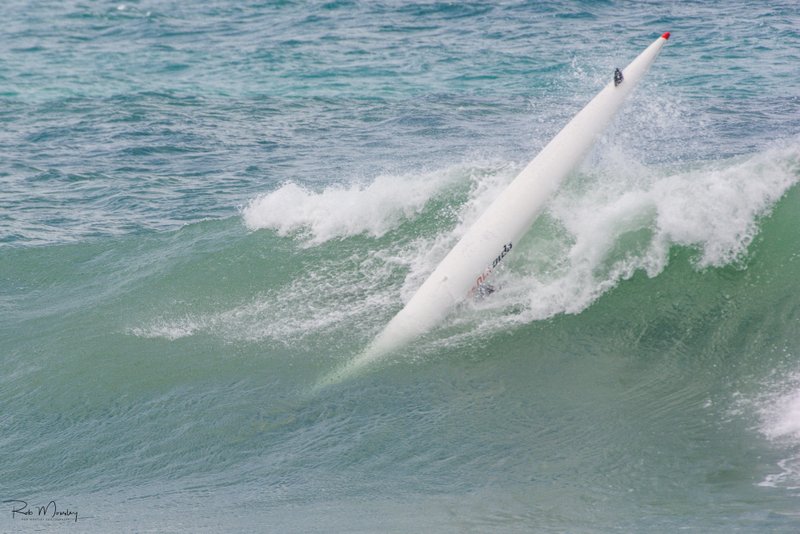
...Gone! The essential thing is NOT to try to stay too long in the boat!
Ever broken a boat there?
No, I’ve never broken a boat there. I’ve been fortunate – but I’ve also made the right calculations and decisions as to when to go, where to paddle, what boat to use, all those sorts of things. So, so far, no broken boats and I hope to keep it that way!
Isn’t a spec ski more suited to those conditions?
Yes, a spec ski is better for these conditions: more volume in the nose, more rocker, seat maybe a bit further back. I don’t have a spec ski, so the V10 Sport is the only ski I have suitable for the waves.
I would prefer to be sitting further back, or with more volume in the nose to keep the nose out; it would also allow me to take off in a more critical spot and ride the wave out.
Get Epic to send me a spec ski, haha!
This isn’t the first time you’ve done this by a long shot – there’s also a fabulous video, shot by Jean Tresfon using a drone, isn’t there?
Yes! It’s here:
Technique Tip: Extreme Remount with Oscar Chalupsky
Written by Rob MousleyThere are quite a few how-to-remount videos on YouTube - but once again Oscar shows us the best technique for remounting and he makes it look easy (it is easy, you just need to practise!). Remounting is one of the core skills in surfski paddling - along with the brace stroke. Best you don't come out of your ski at all, but if you do, this is the best and easiest way to get in again.
Additional Info
-
Content Part 2
.
Tech Tip: Drying out the inside of a Surfski Hull
Written by Rob MousleyIt’s inevitable: sooner or later your surfski’s hull WILL be punctured and it WILL take on salt water… and over time it’ll get heavier and heavier no matter how much you try and drain it. Here’s how to get that pesky moisture out of your surfski.
Additional Info
-
Content Part 2
Dry the Interior
Now you need to dry the inside of the hull.
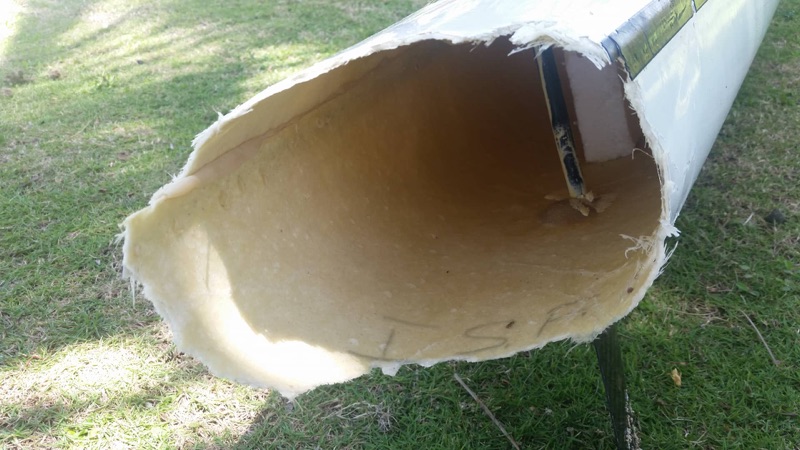
You can try leaving the hull outside in the sun for a couple of hours with the bung hole pointing up; the hot air (containing moisture) will escape. But to really dry the hull out, you need to do more.
Sharon “downwind Queen” Armstrong of Durban, South Africa, found a practical solution for her ski. Durban is a humid, tropical city, so she took extreme measures:
“I put my boat in a confined room, with a heater and dehumidifier,” she said. “Then I got an electric mattress air filler and attached a tube from a drinking system to it and placed that tube inside the boat and put the air filler on.
“So, it is rotating dry air around inside the boat. It has finally lost 600 grams so far in a day and has dried out the whole inside.”
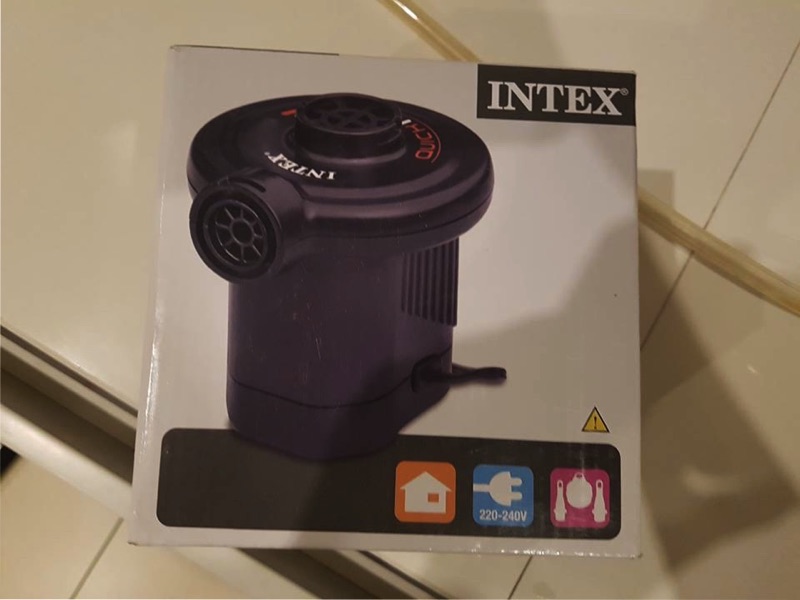
An inexpensive air pump...
What’s important is to try to work the tube as far into the hull as possible so that the air in the tips of the hull is shifted.
If you’re in a place that is not particularly humid, you can simply put the ski outside in the sun and run the pump there. Essentially, you’re looking to pump warm dry air throughout the hull to extract the moisture.
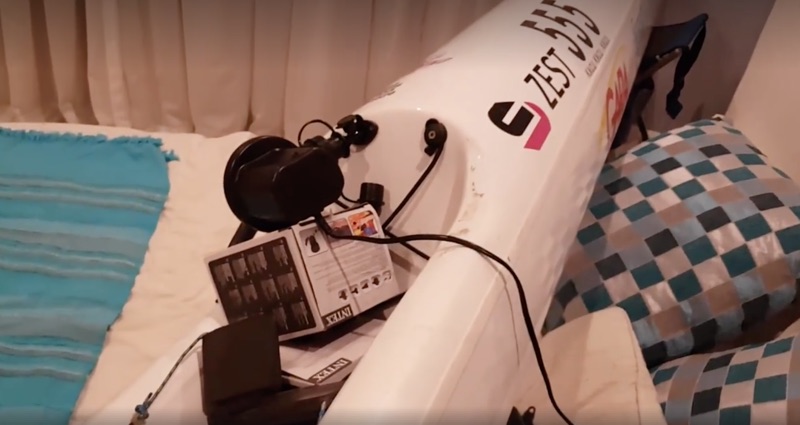
Getting rid of the moisture
CAUTION! Don’t seal up the bung hole! The air must be able to exit the ski freely! If you blow it up like a balloon, the deck will bulge and could detach from the stringer – leading to the aforementioned expensive damage!
Can't wait to try this myself - I'll report back on how much of that 300g I manage to get rid of!
Accident Report: French Paddler Dislocates Shoulder
Written by Rob MousleyAs the avalanche of water broke over him, smashing him off his surfski, Killian Marzin felt an agonizing pain shoot through his shoulder. He knew he was badly hurt – and the next wave in the set was roaring in towards him…
Additional Info
-
Content Part 2
…and Retrieval
Back on the Île du Bec, Marzin was cold and in pain.
“I was getting colder,” he said, “and as the adrenaline went down, I started feeling sleepy.”
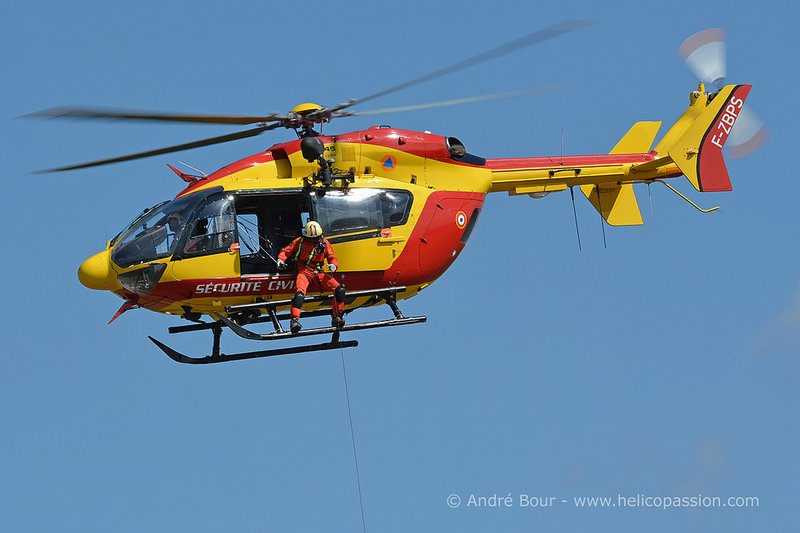
Finally, he heard the helicopter in the distance. “It took another twenty minutes before the pilots found me; they spotted the reflection from the tapes on my PFD,” he said.
Landing on the island, the crew stabilized Marzin before flying him to hospital for treatment.
Marzin’s surfski and paddle spent the night on the island and was retrieved without damage the next day.
Sharing the Experience
To Marzin, the most shocking thing was how quickly a mellow training run in mild conditions had turned into a life-threatening nightmare.
“I was left with a dislocated shoulder and a lot of emotions,” said Marzin. “I want to share this experience so that others can learn and avoid doing the same thing.”
His suggestions:
- Always have a means of communication: VHF, phone, flares
- Avoid paddling alone
- Make sure someone on shore has your route and timetable.
- Wear high visibility clothing (fluorescent and reflective)
- Take water (and perhaps an energy bar)
- If you do get into trouble, take the time to think your options through without panicking.
"Like Being Hit by a Truck" - Samoa Shark Incident
Written by Rob Mousley“All I remember is that it felt like being hit by a truck,” said Andy Wheatley. “The crunch was pretty impressive!”
Flung violently off his surfski and into the water, Wheatley’s “first thought was to get back on and go!”
Additional Info
-
Content Part 2
No Grudge
Dr. Mark Meehan, a scientist at the Australian Institute of Marine Science wrote, “Judging by the triangular shape of the teeth marks on the bottom of the ski it is almost certainly a shark. Attack from below and behind on the rear of an animal is typical of species that prey on larger marine mammals”.
Wheatley was concerned not to “blame” the shark. “Yes, this was a suspected shark encounter,” he said, “but no means an attack, just an animal looking to see what I was doing in their back yard.
“Just image the shock they got munching down on a mouth full of fiberglass!”
In a desperate all-out, red-lining sprint, the two paddlers put everything they had into the last 300m to the finish. 50m to go and Noé Pelizza surged forward, …but the nose of his black surfski ramped up the back of the next wave and he slowed – just as Esteban Medina, nose down, accelerated onto the run behind him…
Additional Info
-
Content Part 2
Women’s Race
“I really have to learn how to start!” said Angie Le Roux (FRA). “I think I put too much pressure on myself; it was a lifesaving start and as I jumped in, I fell off the other side of the boat!”
Notwithstanding her start, Le Roux rounded the buoy in fifth position in a strong women’s field; her downwind skills then came to the fore and she quickly caught the race leader, Judit Vergés (ESP).
“The first downwind section was side-on and very technical,” said Le Roux.
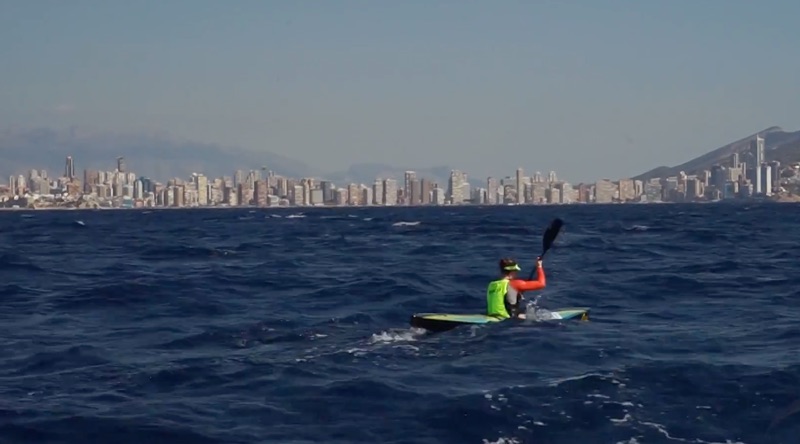
Angie Le Roux rides a wave, Benidorm in the background
The two women diced, trading wave for wave. “I couldn’t get past her,” said Le Roux. “I wasn’t feeling very confident and had to force myself to focus on what I was doing.”
But as the waves increased in size, Le Roux started to relax. “I was feeling better and started playing with the waves, enjoying what I was doing.”
By the time they reached Benidorm Island, Le Roux had moved into the lead and in the clean runs down to Punta Bombarda, she paddled away from the rest of the field.
Worried that the other women would be stronger on the sheltered section after Punta Bombarda, Le Roux said she “paddled as hard as I could. I was so worried to see Judit or Amaia passing me on the flat!
“The last section was very physical,” Le Roux said. “A perfect race!”
“So many girls”
“It was so pleasant to race with so many girls,” said Le Roux. “We were 33 out of about 100 paddlers… 1/3 of the field, incredible!
“Earlier this year I wanted to stop training/paddling/racing because being alone year after year is difficult to handle,” she added. “But at the same time, I knew I couldn’t stop because we have the world champs in France next year.
“This win is really something for me… hard work pays, so I’m happy – but I know I still have so much to work on!”
Day Two: Masters and Mixed Doubles
On Sunday, the wind was blowing in the opposite direction and a Masters race was run from Villajoyosa to El Campello.
A light northeaster increased in strength during the race, providing a mellow downwind for the paddlers.
Michael Dobler (GER) won the men’s race with Emma Levemyr (SWE) taking the women’s title.
Twenty-six mixed doubles took part in an “unofficial” race; David Szlatcha/Lea Caurant (FRA) took the win.
-
Content Part 3
Summary Results
(Click here for the full results)
Women
- Angie Le Roux (FRA) 1:36:53
- Judit Vergés Xifra (ESP) 1:38:13
- Amaia Osaba Olaberri (ESP) 1:42:55
Men
- Esteban Medina Ojeda (ESP) 1:25:37
- [Noé Pelizza (FRA) 1:25:39] (U23 Winner)
- Gordan Harbrecht (GER) 1:25:45
- David Szlatcha (FRA) 1:25:54
U23 Women
- Lisa Gras (FRA) 1:46:46
- Marie-Sainte Laury (FRA) 1:46:52
- Lucia Serrralta Ferrer (ESP) 1:51:54
U23 Men
- Noé Pelizza (FRA) 1:25:39
- Hector Henot (FRA) 1:26:02
- Pierre Vilella (FRA) 1:28:01
Junior Women
- Anouk Strohmann (FRA) 1:48:00
- Paula Ruiz Arruti (ESP) 1:57:14
- Karolina Paluoudov (CZE) 1:57:28
Junior Men
- Jourge Enriquez Gutieriez (ESP) 1:29:29
- Nathanle Nestour (FRA) 1:33:28
- Bernardo Pereira (POR) 1:33:50
Masters – Day 2
Women
- Emma Levemyr 1:25:05
Men
- Michael Dobler (GER) 1:14:34
- Mekel Lauzrika Jauregi (ESP) 1:15:39
- Michael Odvarko (CZE) 1:16:29
Mixed Doubles
- David Szlatcha/Lea Caurant (FRA) 1:10:30
- Nicolas Lambert/Lisa Gras (FRA) 1:11:05
- Maria Begoña Lazcano Gumerans/Daniel Sachez Viloria (ESP) 1:11:13
[Editor: Knysna Racing Kayaks released the Lee McGregor-designed Classic and Rhythm surfskis in 2017. Contributor and passionate surfski paddler Erik Borgnes has been paddling both them; here's what he thinks of these "short" boats...]
Additional Info
-
Content Part 2

RHYTHM
The Rhythm is essentially the same ski as the Classic and the same length, but about 1 3/4” wider from in front of the cockpit all the way back to the tail. Knysna lists it as 590 cm length and 45.5 cm width and for paddlers under 100 kg weight. Not knowing any better, I would guess that the Classic's mold was split in two and progressively widened to the seat area and then narrowed back to the tail.
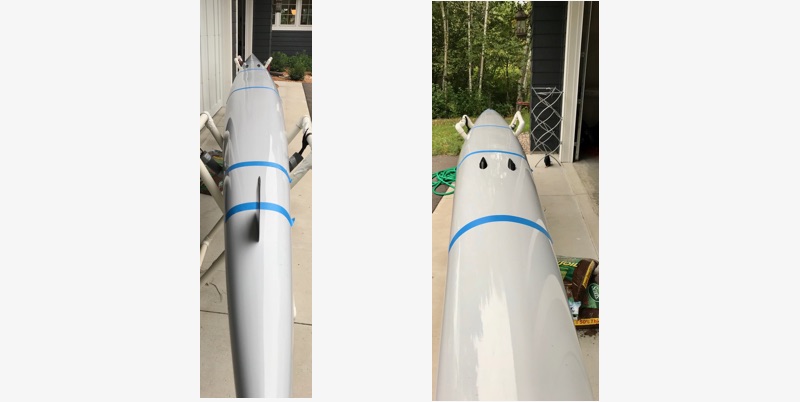
The hull bottom looks considerably flatter and wider from about where your feet are all the way back past the rudder. Rocker, I'm told, is the same for both skis. The Rhythm that I have looks and feels a bit more polished or of higher quality than my Classic. Weight is the same and about 22 lbs (10.5 kg).
Comfort
The Rhythm's seat feels much wider than the Classic's, and its seat bottom feels flatter and like it slopes down and back more. It feels similar in shape but slighly wider than a Gen 3 Ion. The back of the seat slopes away gently like the Classic’s, but since the seat is so much wider, there is much more room around my “love handles” - so while I might get skin irritation in that area after a few hours in the Classic, there’s only daylight between my skin and the seatback in the Rhythm. The seat feels similar in shape but slighly wider than a Gen 3 Ion.
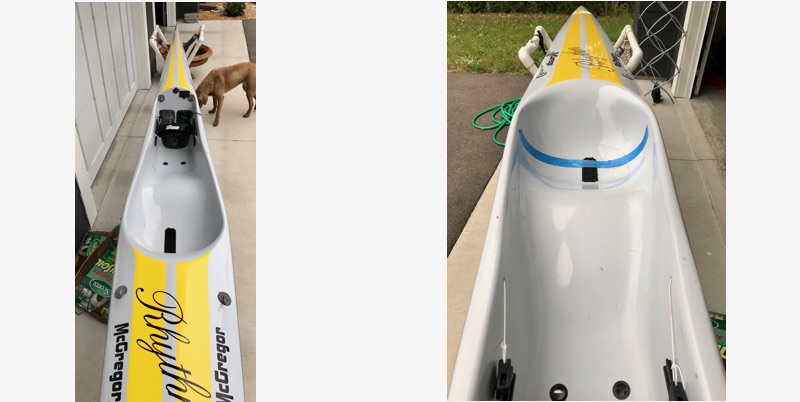
I suspect that those paddlers who often have tailbone issues with seat backs might have issues with the Rhythm, though, of course, that's just a guess. The footwell of the Rhythm is medium to narrow like that of the Classic, and the catch feels narrow as well.
I found the footboard too flexible for my taste, so I swapped it out for a stiffer Fenn footboard like I did in the Classic. I have a replacement Think rudder crosspiece ready but I haven't yet swapped it out and installed a Think rudder.
First Impressions
The first time I sat in the Rhythm, I thought for sure that I had a defective ski because it felt almost like the ski was only floating on the bow and stern - like an arch or a bridge. I actually got out of the ski and scanned the hull to see if I had bent the thing, and of course, I hadn't.
That feeling dissipated while underway and over time and I suspect that it was just the difference in midships volume between it and the Classic - meaning that both have the same rocker but the Classic, being much narrower, sinks deeper. Another thing that I noticed months later is when a 165 lb (75 kg) friend paddled it, about 3 inches (8 cm) of the stern were out of the water. I suspect that he was too light for it, though I don’t know if that would affect its performance.
Stability
The primary stability is much better than the Classic’s while at rest or at low speed, though it has a bit more of a ‘wiggly’ feel due to not sinking down in the water as much. At higher speeds though, the Rhythm’s stability feels pretty solid and it feels like it floats up higher on the water than other skis do. It's hard to compare its stability to other skis because most all other skis that I've paddled use the same formula of lower initial stability and high secondary stability, while the Rhythm is the opposite of that.
What I can say, though, is that once you get used to the stability swap, it feels much more stable than the typical elite ski and probably somewhere in the neighborhood of a V10, Ion, SEI, or Swordfish on flat water - though the Rhythm has less of a side to side roll while underway.
To give you an idea of its stability, I put a V8 Pro paddler in it and he was very uncomfortable with its tippiness. He made it about 8 strokes before he swam. Five minutes later, though, he was able to wiggle his way straight for several minutes. It’s not that the Rhythm is a tippy ski, it just feels different - it’s loose and wobbly at rest and at low speeds.
(Picture this: in a typical narrow ski, when you lean it to the left, the keel line of the hull feels like it stays in the same spot and it’s you that moves to the left. When you lean the Rhythm to the left, however, it feels like you are stationary and the hull is sliding to the right. Yikes, right? But, it’s just a matter of getting used to it.)
Paddling - Flat Water
On flat water, I think the Rhythm feels great and I'd say it's the most comfortable flat water ski that I've paddled. Why do I feel this way? Mostly because the seat is really comfortable for me, the primary stability at speed is huge, the catch is narrow, it accelerates really well, and it has a very nice glide in my LSD training range of 6.8 to 7.2 mph (11 to 11.5 kph).
At higher speeds, I find that it still goes really well though it feels just a bit higher in drag than the Classic. It surfs wake and small waves well like most skis these days.
Paddling - Waves
My experience in small beam waves with the Rhythm is that it gets thrown left and right far more than most other skis because its wider and flatter hull tends to follow the pitch of the water's surface. On downwind 3 ft (1m) waves, I found the Rhythm to feel very loose and twitchy and not all that confidence-inspiring because it felt like it would quickly and continually flip from chine to chine.
Years ago, I had a Custom Kayaks Mark 1, which was wonderful in waves and slop. It had a hull cross section somewhat similar to the Rhythm, but with a wider beam and longer waterline, so I was optimistic that the Rhythm would eat up the waves like the Mark 1 did. But the Rhythm didn't do that for me, and I'm not entirely sure why not.
Enigma
The Rhythm is a bit of an enigma for me. It's truly got the most comfortable seat and paddling position of any ski that I've been in. It's really stable on flat water if you're used to elite skis. While its speed feels just a small notch below the Classic (I'd roughly equate the Classic's speed to a Gen 1 V12 and the Rhythm to a Gen 2 V10) it's far more stable and, in my opinion, more enjoyable to paddle on those long leisurely paced LSD sessions that many of us do.
But, in my opinion, the Rhythm misses the mark as a rough water ski, probably because it's too flat bottomed. The predicament that I'm in right now is that I have my Rhythm up for sale, but the more I paddle it on flat water, the more I like it, and the more I think that I need to keep it just for these 3-4 hr flat water paddles that I do about once a week.
But, do I really need to keep this ski just for those long flat water paddles when I could sell it and get something newer and shinier? I probably do because comfort is paramount and it can take years and piles of money to find at a ski that you can sit comfortably for hours in.
Latest Forum Topics
-
- Keep Your Essentials Safe with the 10L Dry Bag by Harry Cooper
- 5 days 22 hours ago