

"It just kept munching" - Shark Destroys Surfski
Written by Rob MousleyEast London, South Africa: Angus Warren watched helplessly as the shark’s teeth crunched through the hull of his surfski. “It seemed to go on and on,” he says, “pushing and chomping. I was thinking, why is it not working out that it isn’t food?
“I can’t tell how long it took, but I had enough time to shout a couple of times to the others.”
The next thing he knew, he was in the water…
Additional Info
-
Content Part 2
Wreckage – and a Mystery
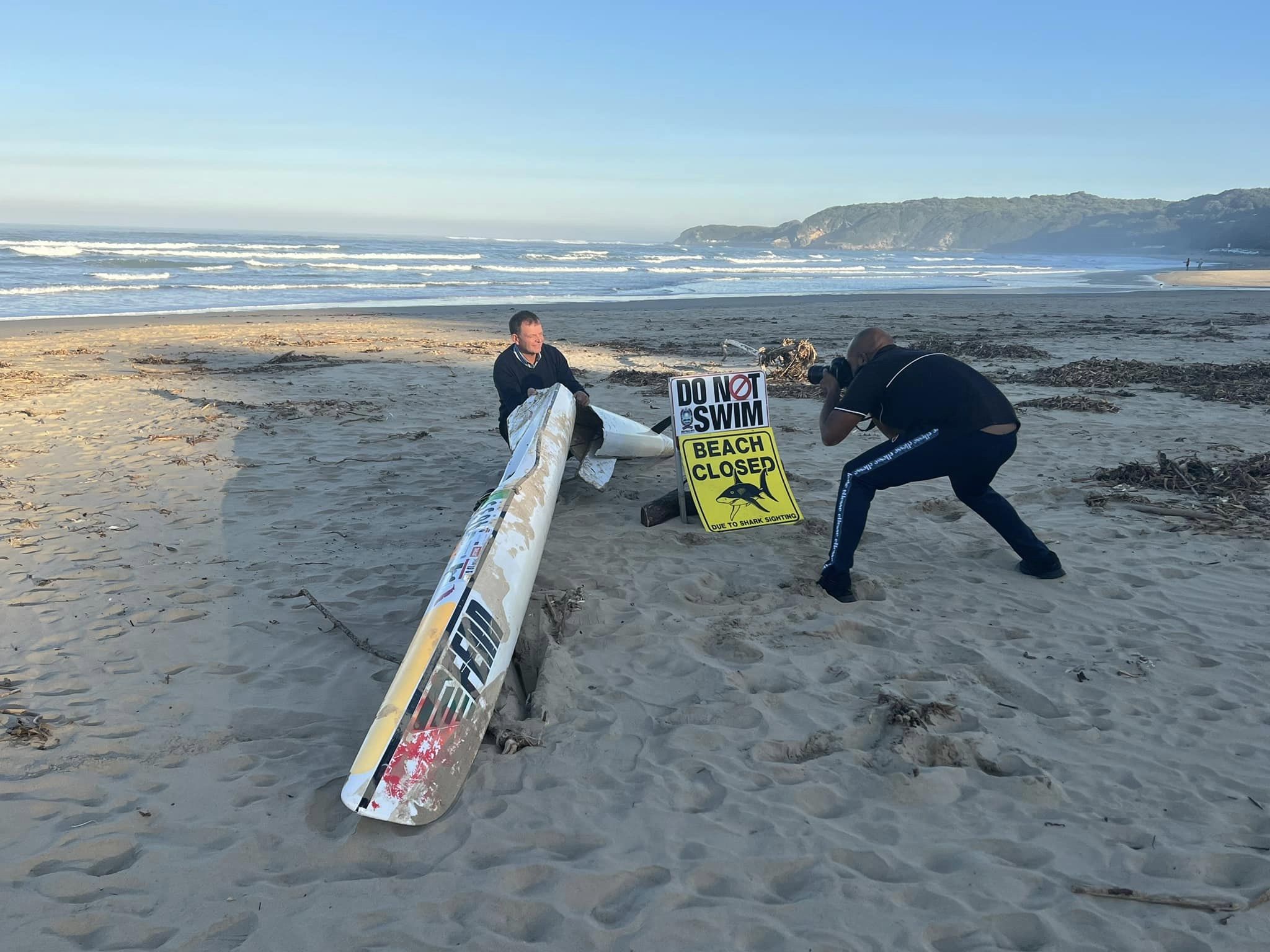
The remains of the surfski had been swept away in a counter current, ending up in front of the clubhouse, some 200m behind the backline. Local paddler Hennie Roos went out in his ski and dragged the wreckage back to shore.
Having been convinced that the shark had bitten the ski in front of him, Angus was shocked to see the location of the bite – some 30cm behind the seat.
“I must say I was quite taken aback – I thought it was biting the front of the boat,” he says. “I’m a bit puzzled how I ended up facing it. I can’t remember what happened.
“I feel the impact, I don’t know what it is. What hit me, what’s happening? Then, the chilling part, the shark munching through the boat in front of me… Calling for help.
“The crunching is what I remember. The persistence of the thing crunching through the boat and not letting go.
“I remember seeing a fin on the way out, but you’re not sure what it was. Dolphin? Bird? I didn’t think anything of it. I’ve seen fins twice before – at the Freedom Paddle in Cape Town.”
Vulnerable
“You realize your vulnerability,” he says. “It’s only when something like this happens that you realize how important it is to have other people around you. Just always have other people around you. You never know what could happen.”
Angus laments his surfski. “I did two PE-EL Challenges in that boat,” he says. “Two Cape Point Challenges, two Freedom Paddles, seven Pete Marlins…”
On the beach, the surfers and a couple of lifesavers came over to see what had happened.
“Then the next person we saw was a shark attack survivor,” says Angus. “He’d been attacked while surfing and had been badly injured many years ago.”
“This was a bit of a wake-up call,” reflects Angus. “I wouldn’t say I’m a reckless paddler, but certainly confident to go out on my own.
“I won’t stop paddling – although I don’t own a ski at the moment! But when I do paddle again, I’ll make sure to have a crowd around me.”
“It makes you think,” says Andy. “I had a similar incident back in 2007 a couple of km up the coast. The shark knocked me off and punctured the boat but didn’t bite a great hole out of it. I managed to paddle it back to Nahoon, full of water.
“So, for me it was old hat,” he laughs. “Angus was shaken, I was stirred.
“One of the guys on our WhatsApp group said he was surprised that Angus was attacked – he thought there was such a thing as professional courtesy between sharks!”
The remains of the surfski were examined by East London scientist Kevin Cole. From the measurements of the bite marks, it’s estimated that the shark was some 2.5-3m in length. It’s presumed to have been a Great White.
“Still, it’s a lot more dangerous to be on the roads,” says Andy Morris. “You would expect though, for it to be a once-in-a-lifetime experience!”
CAPE TOWN - Hank McGregor and Josh Fenn convincingly claimed back their Prescient Freedom Paddle title on Thursday in a dramatic race marked by tough conditions and a rain-delayed start. Conditions were extremely tough - a brisk northwester blowing spray from the big confused chop into the paddlers' faces as they headed out to the island. Huge breaking surf on the far side of the island ensured a wide line but the wind dropped as the fleet started on the journey back to the finish, making it that much more difficult and energy sapping to catch the runs.
Additional Info
-
Content Part 2
As the leaders turned for home McGregor and Fenn made their break.
"Just after the Island Hank said "it's time", and I guess that was the go signal and we put the hammer down from there," recalled Fenn.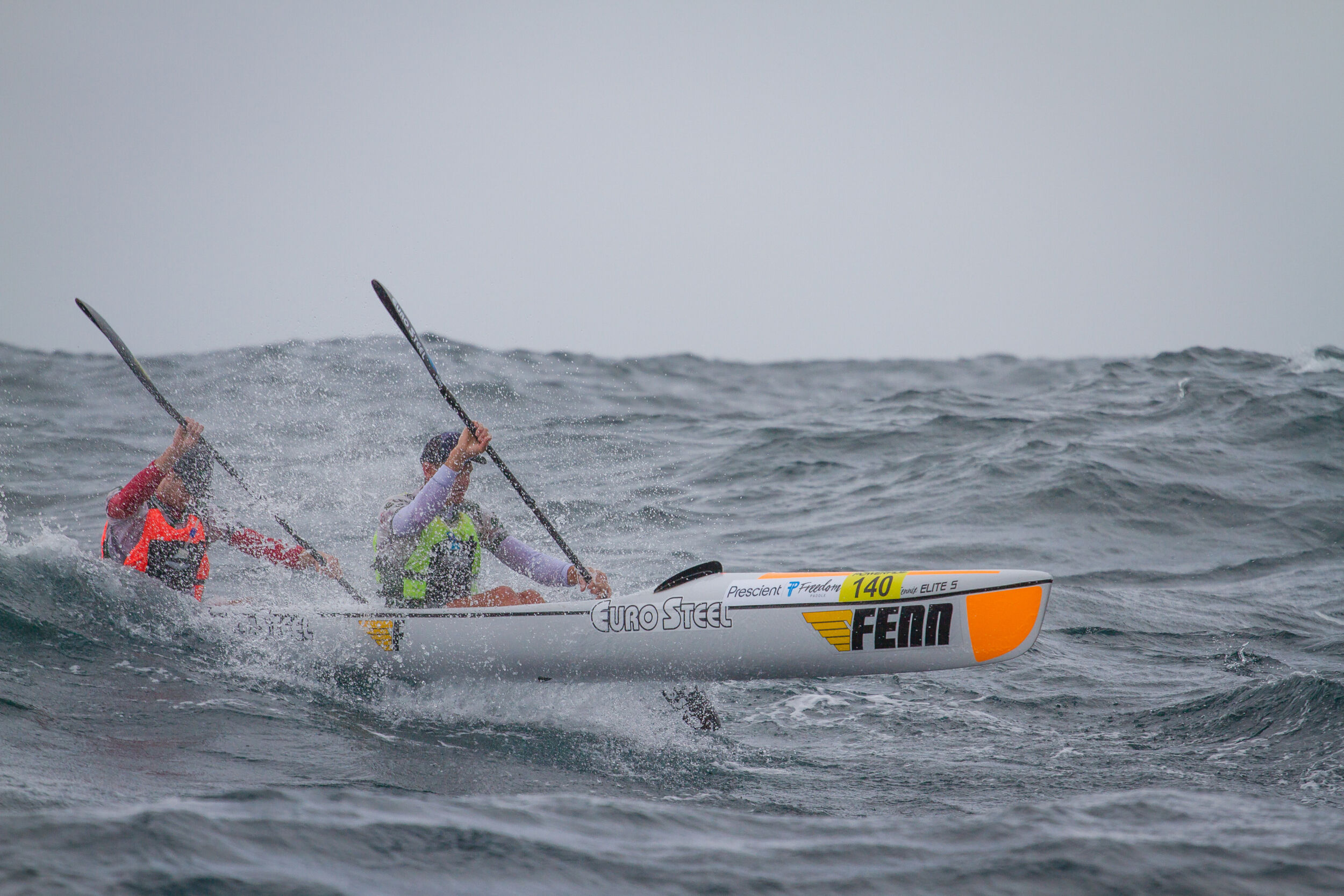
McGregor and Fenn - ramping the oncoming swell on the way out to the island
Birkett said he had enjoyed the testing conditions -- it was a "great experience". He added that "Hank and Josh were in a league of their own coming back. As soon as we left the island on the way back they just left all of us."
McGregor recalled: "There were four boats going around the island together. Once we got around to the wild side the surf was big -- but it was fantastic. We managed to put our nose ahead from there on the top side of the island and smoked it on the way home.
"This is our third win together, so we are really stoked."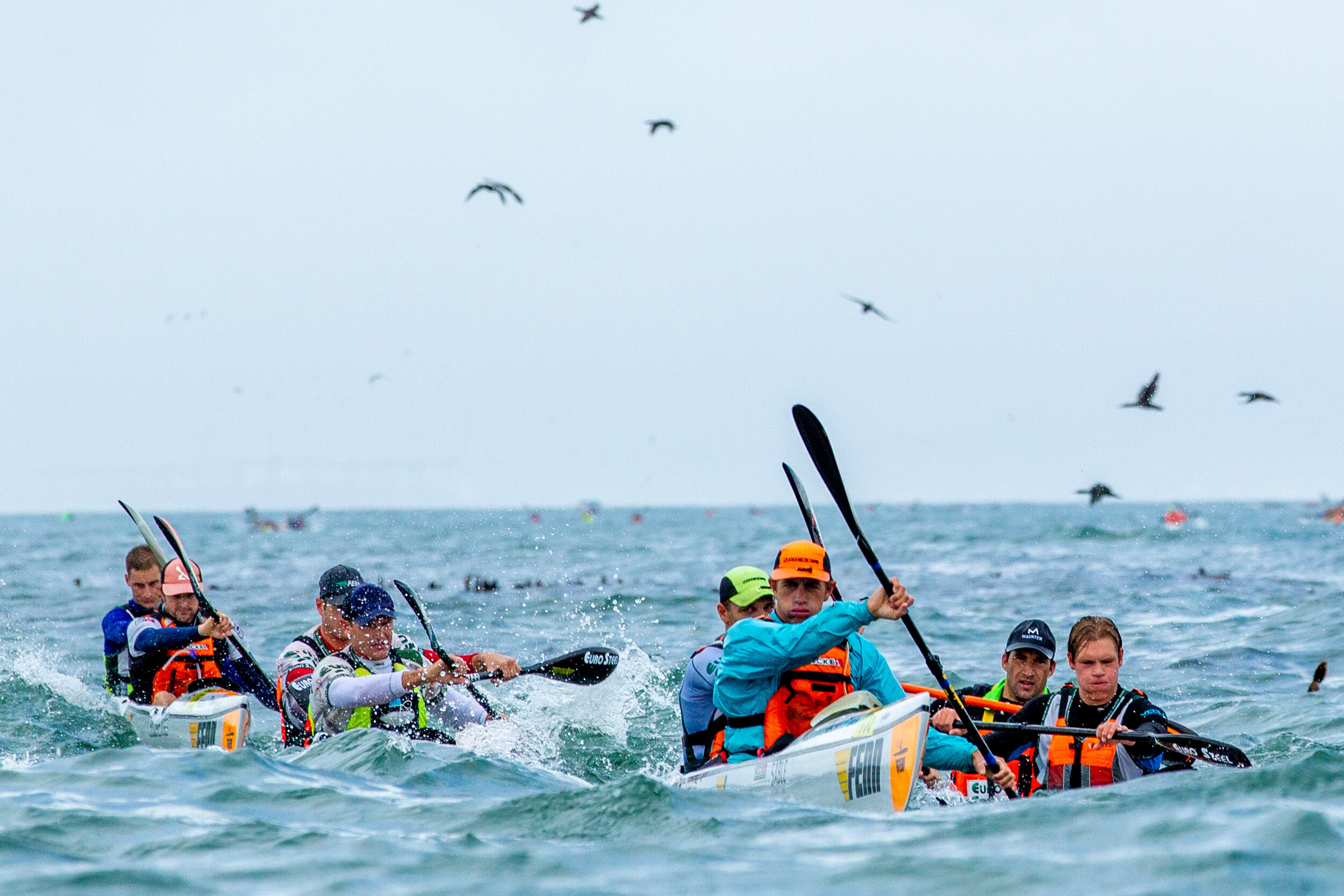
Rounding the island - the lead group L-R: Notten/Fenn, McGregor/Fenn, Mocke brothers, Hart/Birkett
Women's Race
The women's race panned out in similar fashion, although Burn and Hockly waited a bit longer before making their decisive break.
Burn said: "Going into the headwind on the way out was hard work. We are very light so we get thrown around a lot. By the time I got to the island I was pretty tired but thankfully I love the runs and coming home was pretty awesome. We worked really hard."
They had, however, to overcome a "terrible start", and Hockly said it turned out to be "one of the hardest races we have ever done."
"Michelle's skill is unbelievable and being able to sit behind her while she navigated the island was such a pleasure. The start wasn't really great ... we were the last boat to leave the line."
They caught the other leading women at Robben Island. "Then it was classic dicing with Candice and Kira but at the end we managed to pull away," said Hockly.
A total of 410 paddlers took part in the day's various events on 258 boats.Selected Results
(Full results, subject to corrections: Prescient Freedom Paddle 2023)
Men
1 Hank Mcgregor and Joshua Fenn,
2 Ulvard Hart and Andy Birkett,
3 Jasper Mocke and Dawid Mocke.
Women
1 Michelle Burn and Saskia Hockly,
2 Candice Murray and Kira Bester,
3 Jade Wilson and Nix Birkett.
Mixed
1 Melanie Van Niekerk and Scheepers Schoem,
2 Ian Trautmann and Stephanie Von Der Heyd,
3 Angie Austin and Craig Flanagan.
Blast from the past: 2008 Interview with Dawid Mocke!
Written by Rob Mousley & Joe GlickmanLast Friday, however, I paddled with Dawid on a windless autumn evening in Cape Town. Cruising from Fish Hoek to Muizenberg, we paddled together, stopping at all the coves to surf a few waves. In short, the operative word was "fun". This was a different Dawid - off duty - and, well, I've never paddled with anyone so noisy before. Whistling, singing, shouting to folks on shore - yahooing as he caught a wave. Heading home at dusk we crept up behind a group of seals lazing on the surface. Dawid began barking like a five-year-old paid by the bark...until the bewildered seals rolled their eyes and moved on. Clearly, it was a different view of a man who earns his daily bread in a boat. Dawid trains and competes as hard as anyone on the circuit but to see how much he loves to paddle simply for the sake of paddling - that was so uplifting.
But make no mistake: Mocke is hardcore. He and his wife Nikki are professional paddlers - she's qualified in K4 for the upcoming Beijing Olympics. I asked him how they survived in a sport that's not noted for major sponsorship (yet).
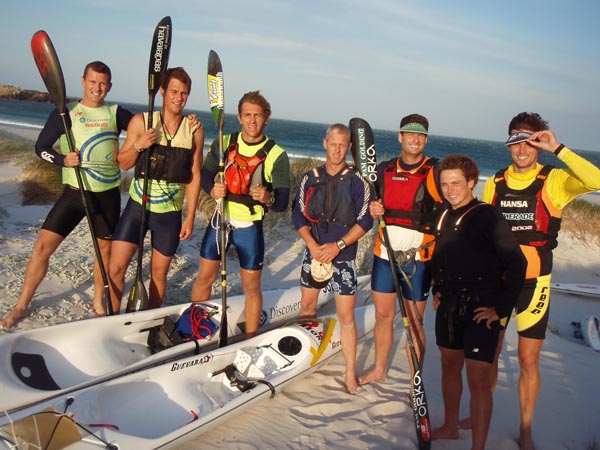
Dawid and the Bay Crossing gang 9 Feb 2008
You and Nikki opened your own shop late last year, the Paddling Centre in Fish Hoek. How's it going?
The Paddling Centre is going really well. We have been open now since October and have been blown away by the support of the paddling community. We are really enjoying learning about business and people, it's great to be able to give a customer "educated advice" and know that they are buying exactly what they need.
With Surfski School, the shop gives you a 3rd revenue stream (the increasing amount of prize money in the big races is a third). Do feel you have enough there to make a viable career out of surfski paddling?
We actually have 4 revenue streams - we are trying to get the MOCKE brand going as well - so things are busy! But to answer the question there is definitely a career out there in Surfski paddling... It is growing really fast and there are lots of exciting things happening. Europe are starting to jump on the wave in a big way now too...
Describe your paddling week - how often do you get on the water, what do you do?
It is tricky to describe because it changes a lot depending on the time of the year etc. But a general guide for me looks like this.
|
Day |
AM |
PM |
|
Mon |
Paddle |
Paddle |
|
Tue |
Run and gym/swim |
Paddle (time trial) |
|
Wed |
Paddle |
Paddle |
|
Thu |
Run and gym/swim |
Paddle |
|
Fri |
Paddle |
Off or Paddle |
|
Sat |
Surfski School or a long paddle |
Off |
|
Sun |
OFF or downwind if the wind is right |
|
Additional Info
-
Content Part 2
Do you cross-train? Running/Gym/Swimming? What else?
Yes, definitely, running and gym are very important and coming from a swimming background, swimming is a great way to keep strong and fit. We do a small bit of mountain biking too.
How's your training for Molokai gone? Do you taper down? When?
It has gone very well. Last year I suffered a bit with the distance of the race... it was my longest paddle ever! But this time I have really done my homework, so I feel ready for flat, downwind or headwind! I will stop doing such long distance from now (End April) and keep ticking over and doing downwinds till the race.
What's different about the training you do for Molokai compared with say, the upcoming World Cup race in Durban?
The Biggest difference with the Molokai to the other races is that you are in open water and the distance...Having no land around you and open seas brings in a whole other element.... The World Cup in Durbs is a much shorter race... It's a sprint really!
Nikki is going to Beijing in October? Are you going too (to support her)?
The Olympics are in August, they start on the 8th of the 8th 2008 at 8:08... And yes, I am definitely going to support Nix. We are a team and I have been through all of the ups and downs with her on the Olympic road. It has been a tough long road and I am so proud of her, I want to be there to support her for sure!
Who do you think your main competition at Molokai is? Are there any paddlers from Australia who really concern you?
Every athlete out there is a competition... Anyone could win this race... its long and technical...
It appears that you often take off at the beginning of the race (Cape Point 2005, Dubai, SA World Cup 2006) and try to drop the other guys. Is that true? If so, will you do the same at Molokai where it seems that in downwind years it's important to keep an eye on the other guys so that they don't take a different line and get an advantage?
Yes, I have been known to do that... like I said, I have trained really hard for Molokai and don't like following people... You can't win a race if you are following... But Molokai is different animal, so, maybe my tactics will be different!
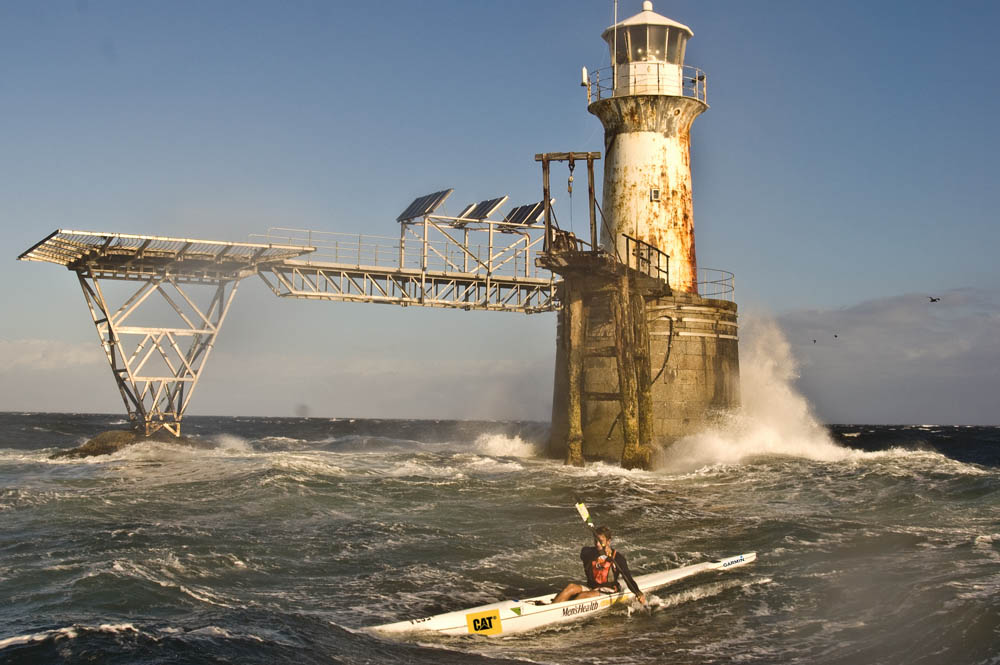
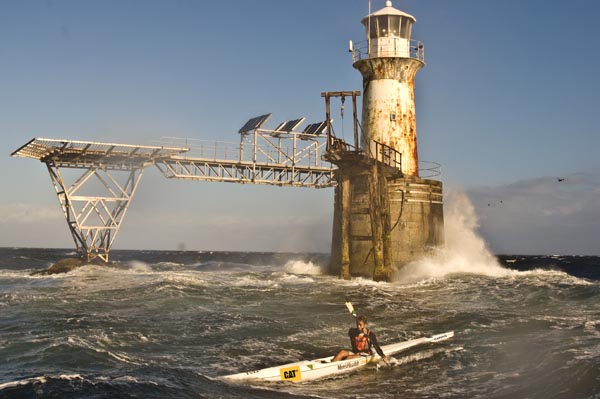 Outrageous fun - classic Millers Run conditions at Roman Rock lighthouse
(For a larger version of this stunning pic, click here)
Where do you think Surfski paddling is going? How important do you think the World Series initiative is - what do you think we should be doing with it?
I think Surfski paddling is going places. It is growing internationally very quickly. I think the World Series is great, it gives EVERY paddler out there a chance to be ranked and formalizing it makes sponsorship and growth easier.
How important is it to you to win the World Series overall?
It is a lovely thing to say but there is no money incentive so I suppose from a financial point of view it is better to focus on winning a race rather than the series. If I was focused on the series I would definitely have gone to Puerto Rico, but because there is no real incentive to win the series (besides bragging rights) I'll be focused more on the bigger races.
Which have been your sweetest wins? Which are you most proud of?
Dubai Shamaal 2007. There was a lot of hype before, all the top guys were there, and I had a terrible start... I had to dig deep and focus to win that one...Plus winning the biggest prize money purse in SS paddling ever was fantastic.
Then the Dolphin Coast last year was also super sweet! Winning a race in typical KZN conditions was great, and to do it with my brother made it special.
You've trained something like 1,700 paddlers from beginner through to "Ocean Expert" in Cape Town alone. What happens to these guys? Do they go onto racing? Do they drop out? Do they just paddle socially? And how do we bridge the gap between beginners and participation in races like the Discovery Men's Health Series?
That is the beauty of Surfski paddling. It is limitless and anyone can do it. You can paddle throughout the year in any conditions for any reason. Health, social, race practice etc.
A lot of our paddlers go through the ABC course and end up in the Ocean Expert class racing and training hard. But a lot of the Surfski School students are also doing it for social and fitness and aren't too interested in racing. They are definitely given the opportunity and knowledge to race.
You turned 30 this year; how much longer do you think you'll be at your peak? Do you think Oscar at 45 is over the hill?
Age is just a number... I am just starting out! That is the beauty of Surfski paddling, age brings experience... So Oscar is a wealth of knowledge and experience.
Pick the top 5 paddlers at Molokai 2008!
Check the top 3 in the World Series rankings [Editor: that's Oscar Chalupsky, Lewis Laughlin, Dawid Mocke] and add Hank McGregor and Tim Jacobs. But not in that order! (Oh, and of course there's always the Dean Gardiner factor!)
Your faith is clearly important to you - how much does it help your paddling?
I firmly believe that my purpose in life is to glorify God through paddling. So being a Christian is the reason I paddle. It is my gift and talent that I use to the best of my ability to do my purpose here on earth. Besides my faith being the reason I paddle it helps me also to keep things in perspective... I am not alive to win races and be a hero...there is so much more to it than that. My existence is not based on my performance. It is about meeting people, making real friends, changing lives and living on Purpose.
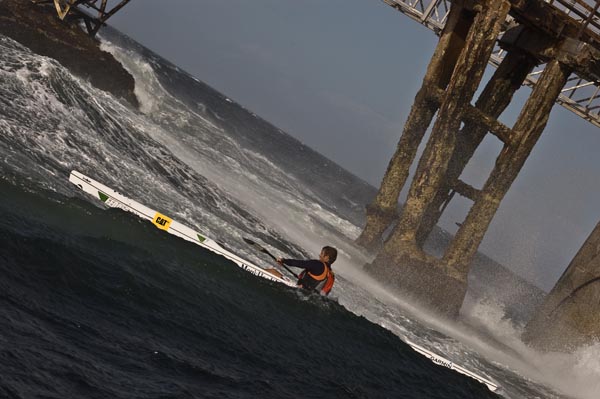 Dawid dicing with the reef at Roman Rock - January 2008
Box 213, Noordhoek, 7979
Cape Town, South Africa
+27 21 413 1764
+27 82 784 5673
Send an email. All fields are required.
“Hey, Rob! Help!” The shouts penetrated the sound of the howling wind and crashing waves – and even through the noise it was obvious from the tone of his voice that something was seriously wrong. I turned and headed back upwind.
Additional Info
-
Content Part 2
A non-event? Not quite
Pete was a rock – with his strength and calmness we could have self-rescued with him holding the boats together and me paddling. But I’m happy with the decision to call the NSRI; the sea conditions were extreme and getting worse, and the cold was a major factor.
But there were some interesting take-aways:
Phones in Pouches Work
Pete uses an iPhone X and found it fairly easy to work the touch screen even through his waterproof pouch and with wet fingers. He says that he thinks it’s important a) for the interior of the pouch to be absolutely dry and b) for there to be some air in the pouch so that the surface doesn’t stick to the phone’s screen.
SafeTrx Works
SafeTrx “takes the search out of search and rescue” – at least to some extent. But we still had to guide the boat that last km towards us using the radio (although the phone could have worked for that too).
The Radio
Afterwards, Darren told me that the key to using the radio in those conditions is to blow hard onto the microphone to displace any water there… The reason for the garbled voice was probably a combination of the strong, noisy wind blowing over the mic and water covering it.
I’ve often made calls to Cape Town radio to ask for radio checks, and I’ve used the radio once to make an emergency call, but in relatively calm conditions. The situation we were in was very different.
The Buddy System
Over the years I’ve pretty much written off the buddy system (i.e. staying within contact of your paddle buddy), believing (and sometimes experiencing) that it’s often impossible to maneuver to someone’s aid in big wind and sea conditions. Perhaps it’s a combination of more experience, fitness and the wonderful stability of my Swordfish S, but it was relatively easy to get back to Pete yesterday.
And if I hadn’t been close enough for him to call me, things could have been a lot more serious. Had he been on his own, he’d definitely have found himself in the water – it was only a matter of time until he lost his balance. In any case, to operate his phone to call for help, he’d have had to have been in the water.
It wouldn’t have taken long for him to get very cold.
This is probably the one aspect that really gives me pause for thought about the whole incident. On the Miller's Run, we usually go hell-for-leather, and only buddy up absolutely insane conditions. Yesterday was extreme, by most people's standards, but I was completely focussed on dicing and gave no thought to the safety aspects at all... A case of familiarity breeding contempt?
Cold
I was surprised at how cold we got. Obviously, we were soaked, but we were out of the water on our skis, albeit exposed to the wind.
And this rescue was really quick. From initial call to pick-up, it was only about 40min. If we hadn’t had SafeTrx, it would have been considerably longer.
I thought the paddle back to the beach would warm me up – but I was wrong.
Radio, Phone, Flares, Whistle, Plans A, B and C
Now that I know a little more about using the radio in extreme conditions, I’m more confident that I could make an audible call. But I’ll be testing this again on a future run. It would be nice to know that I can in fact call Cape Town radio even in rough conditions.
I’d previously pretty much given up any thought of manipulating the phone inside the waterproof pouch, but now I’m more confident that that can be done too. (I carry it in any case with SafeTrx running so that I can be tracked, emergency situation or not…)
On this occasion I didn’t have to use flares or whistle, but I carry them too.
I’m more convinced than ever that if you’re going to go out in hectic conditions (and for me downwind paddling, which by its nature involves hectic conditions, is the essence of surfski paddling), then it’s best to have a multi-layered approach to safety.
I’ve not been rescued yet – but if I do ever find myself being rescued, I want to make it as easy as possible to call for help and to help my rescuers find me!
The NSRI Rock!
Here in Cape Town, we have a particularly strong relationship with the NSRI.
With the sheer volume of paddlers on the Miller’s run (our group of 18 “Miller’s Maniacs” alone did a combined total of some 500 last year) it’s inevitable that there should be the occasional incident and we’ve grown very close to (and fond of!) the local NSRI crew in Simon’s Town, to the extent that we’ve done search and rescue exercises with them and they’re even on the main Miller’s Run whatsapp group.
And it’s this closeness and understanding that saw them not only rescuing Pete in double-quick time, but also taking care to cushion his precious new surfski on the deck of the rescue boat.
A heartfelt and grateful thank you to the NSRI Station 10 crew in Simon’s Town!
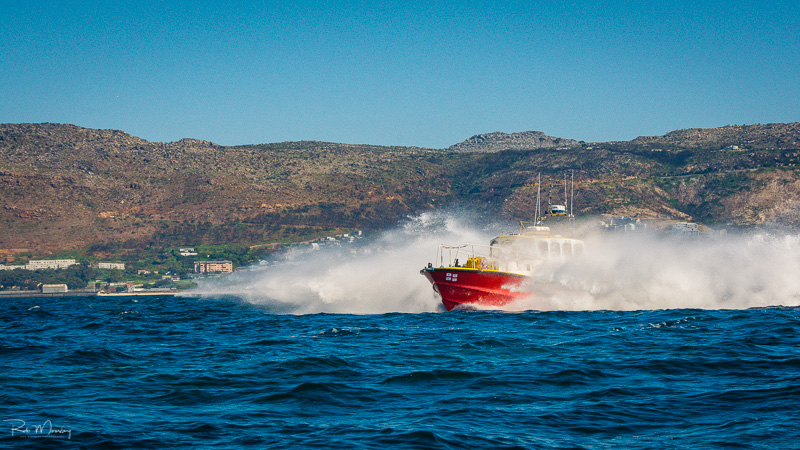
The "Spirit of Safmarine" - at speed!
Fund-raising
Since a particularly grueling rescue during a race in December 2009, South African surfski paddlers have contributed some R6,7million through a special fund-raising account to the NSRI.
If you would like to support this initiative please call Lianne at the NSRI Call Centre on 021 430 4701 or send her an email to This email address is being protected from spambots. You need JavaScript enabled to view it.. Please let Lianne know that you would like to support the Surfski initiative.
You could win one of five R10 000 prizes each month as well as a R100 000 in our annual December draw. For R50 per month, you will get 2 tickets giving you 10 entries each month and 2 entries into the December R100 000 draw.
Review: Standard Horizon HX870 Handheld VHF Radio - UPDATED
Written by Rob MousleyMany paddlers use Personal Locator Beacons, or tracker apps like SafeTrx on their mobile phones. But handheld VHF radios are also a great choice to consider – especially when they’re DSC-capable like the Standard Horizon HX870E.
Additional Info
-
Content Part 2
Radio License
Every DSC-capable radio requires an MMSI number to be programmed into it. The MMSI is a unique 9-digit number that is the equivalent of a phone number. Not only does identify the radio, but it enables other DSC-capable transceivers to make a private call to it – in other words, you can call your buddy without everyone else in range being able to hear the conversation.
In order to acquire an MMSI, however, you must buy a radio license. In South Africa, you apply to ICASA. The cost is not great and you can buy a multi-year license at a discount.
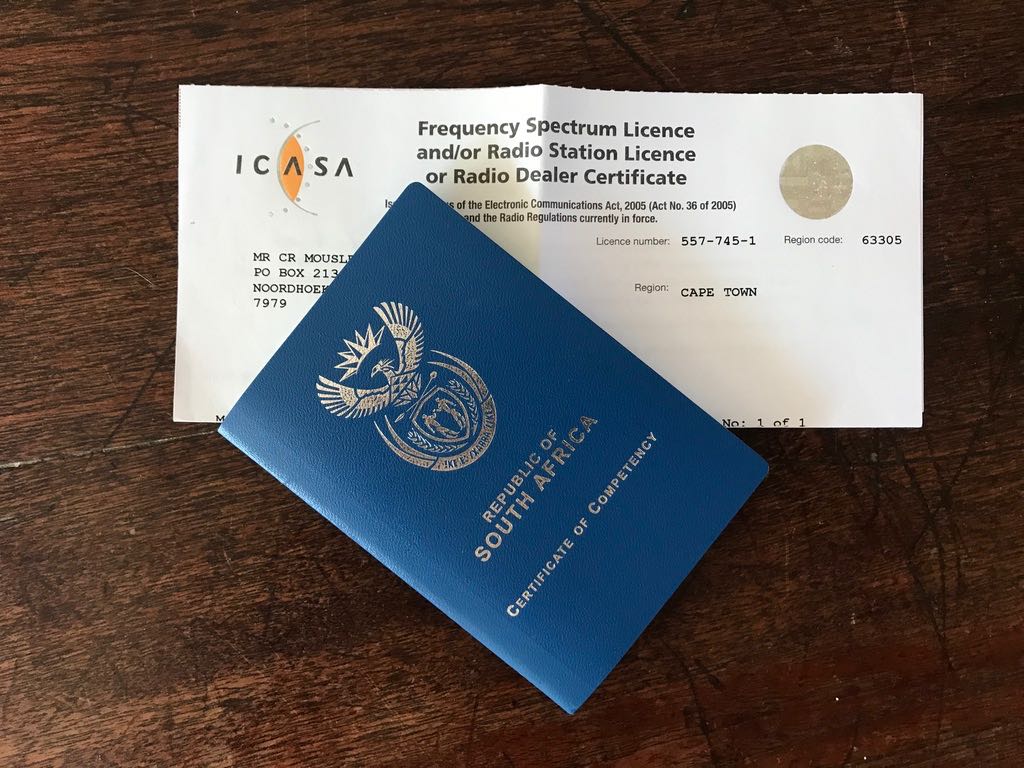
Radio and Operator's Licenses
Operator’s License
It’s definitely worth taking a course to learn how to operate the radio. There are two parts to the course:
- Learning how to program and use the radio, including the various DSC functions
- Learning how to articulate the various types of call, including Mayday, Pan Pan and others.
Fun fact (and one that I learnt only at the course): You say either “over” to indicate that you’ve stopped speaking and the channel is open for someone else to speak or “out” to indicate that the conversation is over (from your side). But you never say “over and out”. That’s an indication to experienced radio users that you’re a clueless newbie!
You’re not likely to be asked for your radio license (at least here in South Africa), but until I’d done the course, I’d never asked Cape Town radio for a radio check… and the first time I did, I found that my radio was faulty. Who knows how long I’d been faithfully carrying it – but if I’d had to use it, I’d have had a nasty surprise.
Now I call up Cape Town Radio for a transmission check at least every month. Aside from confirming that the unit actually works, it keeps me familiar with the operation of the radio, the format of the calls and helps me to remember my call sign.
(Of course, you can always call your buddy if they have a radio to perform a check too. Whichever – it’s worth doing a regular check.)
Alternative radios
The HX870E is quite a hefty beast; it fits into the pocket of my Vaikobi PFD, but only just.
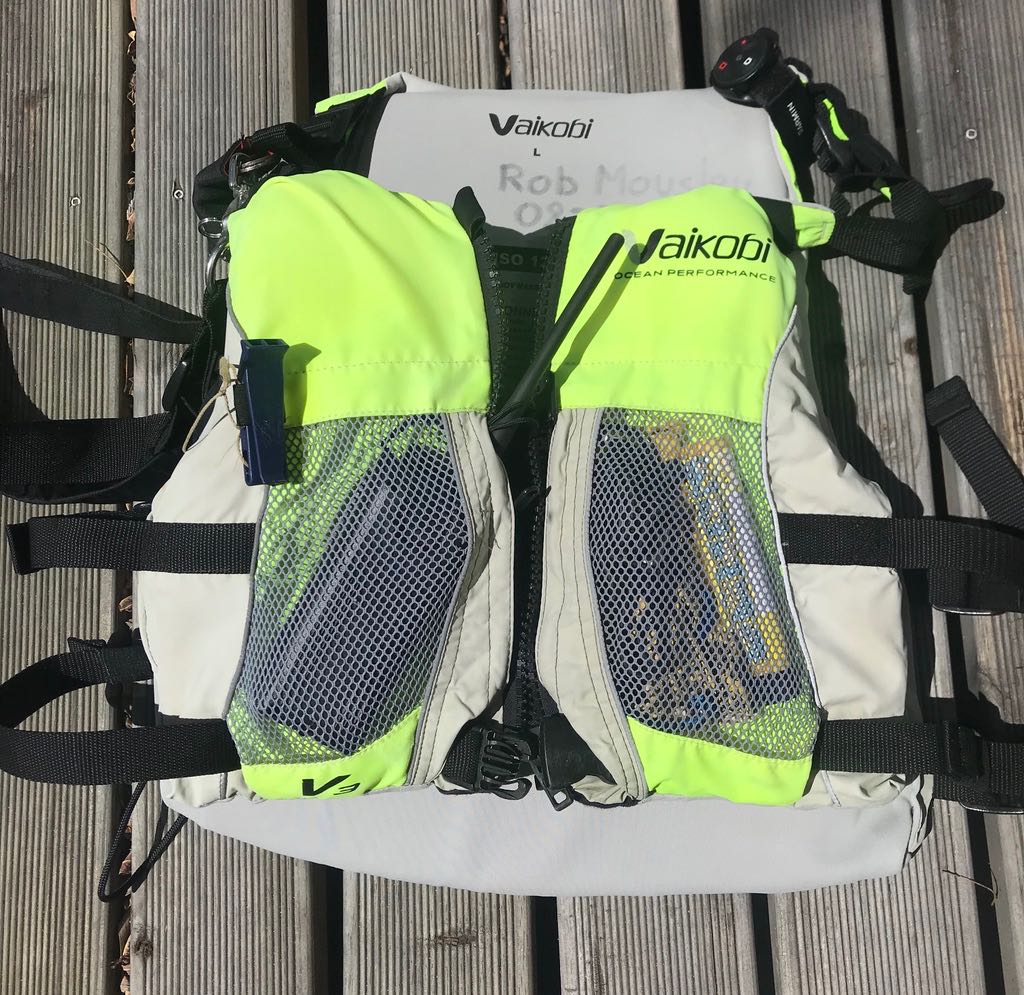
The HX870E fits handily into the pocket of my PFD. (And no, it doesn't interfere with my remount; I've done it many times!)
If you just can’t bear to have something that big, but still want a radio, check out the Standard Horizon HX40 – it’s literally the size of a pack of playing cards, but is still a powerful 6W transmitter. It doesn’t have DSC, but if you’re looking for something ultra-compact, that’s your unit.
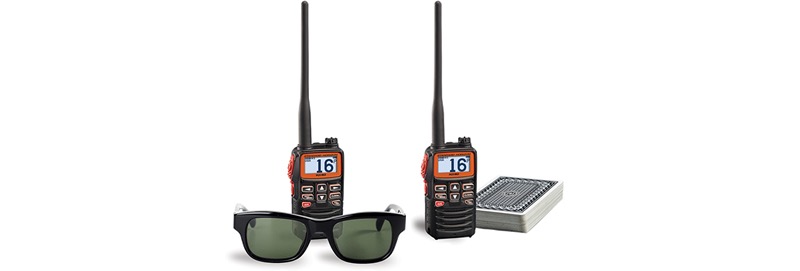
The HX40 is a much smaller unit
Where to find out more
Click here for the global Standard Horizon website.
In South Africa:
- The HX870E sells for around R6,000. Google it.
- The HX40 goes for between R3,300 and R4,000
The course that you should take is the Short Range Certificate. There are various third-party companies that offer training. I did it over a weekend and it cost in the region of R2,000. I strongly recommend it, having a trainer there to ask questions and having buddies to practise with made it fun as well as educational.
You even get an official passport-style license book from SAMSA (after a wait). The course and license are internationally recognised.
You apply for your radio license from the ICASA website. (The website only works with the Chrome browser and is a bit of a challenge to navigate. When I did my licensing, it was a manual process, the good news – perhaps – is that it looks as though you can now do it online.)
Major Upset in Shaw & Partners Dash for Cash as Junior Sweeps the Board
Written by Rob MousleyYou’d think that in a field studded with Olympians, Aussie SLS Champions and Iron Men, competition would be intense… but you wouldn’t expect one athlete to dominate no fewer than four races in row. But that’s what happened.
Additional Info
-
Content Part 2

Shaw and Partners WA Race Week
The race was the second event in the Shaw and Partners Race Week in Perth, Western Australia.
The week-long festival comprises:
- Sunday, 17 Nov: Fenn West Coast Downwinder
- Tuesday, 19 Nov: Ben Hewitt Sunset Surfski Series Race
- Thursday, 21 Nov: Ben Hewitt Sunset Surfski Series Race
- Friday, 22 Nov: The Shaw and Partners Dash for Cash
- Saturday, 23 Nov: The Shaw and Partners “The Doctor”
The $100,000 prize pool comprises:
- Shaw and Partners Dash for Cash: $15,000
- Shaw and Partners “The Doctor”: $50,000
- Shaw and Partners WA Race Week series overall: $35,000
Click here for the latest series points scores
Results
Category Prize Money Paddler Open Men Race 1 $500 Noah Havard Race 2 $1,000 Noah Havard Final $3,500 Noah Havard $125 Don Humble $125 Jeremy Collins $125 Nic Notten $125 Mitchell Trim Open Women Race 1 $500 Jordan Mercer Race 2 $1,000 Georgia Laird Final $3,500 Georgia Laird $125 Georgia Sinclair $125 Jordan Mercer $125 Jemma Smith $125 Teneale Hatton Over 40 Men Final $500 Cade Barns $350 Jim Walker $150 Matt Rees Over 50 Men Final $500 Tim Altman $350 Todd Boreland $150 Dean Beament Under 19 Men Final $500 Noah Harvard $350 Joshua Fenn $150 Ashley Allen Under 19 Women Final $500 Georgia Sinclair $350 Jazmin Shipway $150 Ana Swetish
In a thrilling display showing just how competitive the men’s surfski field has become, the first five places were separated by just 30 seconds… And in the women’s race, a tight finish saw the newly arrived defending champion, Georgia Laird, take the win.
Additional Info
-
Content Part 2
Shaw and Partners WA Race Week
The race was the second event in the Shaw and Partners Race Week in Perth, Western Australia.
The week-long festival comprises:
- Sunday, 17 Nov: Fenn West Coast Downwinder
- Tuesday, 19 Nov: Ben Hewitt Sunset Surfski Series Race
- Thursday, 21 Nov: Ben Hewitt Sunset Surfski Series Race
- Friday, 22 Nov: The Shaw and Partners Dash for Cash
- Saturday, 23 Nov: The Shaw and Partners “The Doctor”
The $100,000 prize pool comprises:
- Shaw and Partners Dash for Cash: $15,000
- Shaw and Partners “The Doctor”: $50,000
- Shaw and Partners WA Race Week series overall: $35,000
Click here for the latest series points scores
Summary Results
(Click here for the full results)
Men
Pos Name Time Category Cat Pos Time Behind Cat State Country Points Pace 1 Cory HILL 40:06.4 Ski Open 1 Queensland AUS 500 3:38 min/km 2 Jackson COLLINS 40:09.1 Ski Open 2 00:02.7 New South Wales AUS 490 3:39 min/km 3 Tom NORTON 40:09.4 Ski Open 3 00:03.0 Queensland AUS 482 3:39 min/km 4 Nicholas NOTTEN 40:37.8 Ski Open 4 00:31.4 Western Cape RSA 476 3:41 min/km 5 Sean RICE 40:38.4 Ski Open 5 00:32.0 Middlesex GBR 472 3:41 min/km 6 Michael BOOTH 41:11.3 Ski Open 6 01:04.9 Western Australia AUS 471 3:44 min/km 7 Kendrick LOUIS 41:18.7 Ski Open 7 01:12.3 New South Wales AUS 470 3:45 min/km 8 Brendan RICE 41:29.1 Ski Open 8 01:22.7
Western Australia AUS 469 3:46 min/km 9 Shannon ECKSTEIN 41:39.5 Ski Open 9 01:33.1 Queensland AUS 468 3:47 min/km 10 Noah HAVARD 41:42.8 Ski Under 19 1 New South Wales AUS 500 3:47 min/km Women
Pos Name Time Category Cat Pos Time Behind Cat State Country Points Pace 45 Georgia LAIRD 45:26.1 Ski Open 1 Queensland AUS 500 4:07 min/km 50 Jordan MERCER 45:51.7 Ski Open 2 00:25.6 490 4:10 min/km 51 Hayley-Jo NIXON 46:01.8 Ski Open 3 00:35.7 KwaZulu-Natal RSA 482 4:11 min/km 52 Jemma SMITH 46:14.4 Ski Open 4 00:48.3 New South Wales AUS 476 4:12 min/km 55 Teneale HATTON 46:34.0 Ski Open 5 01:07.9 Auckland NZL 472 4:14 min/km 59 Rachel CLARKE 46:49.3 Ski Open 6 01:23.2 Auckland NZL 471 4:15 min/km 70 Ana SWETISH 48:11.5 Ski Under 19 1 Washington USA 500 4:22 min/km 74 Bonnie HANCOCK 48:28.6 Ski Open 7 03:02.5 Queensland AUS 470 4:24 min/km 101 Aya OKANO 50:39.5 Ski Open 8 05:13.4 Western Australia AUS 469 4:36 min/km 114 Shannon REYNOLDS 51:25.0 Ski Open 9 05:58.9 Western Australia AUS 468 4:40 min/km
Nippers get to meet Aussie Surfski Superstars, Shaw & Partners WA Race Week
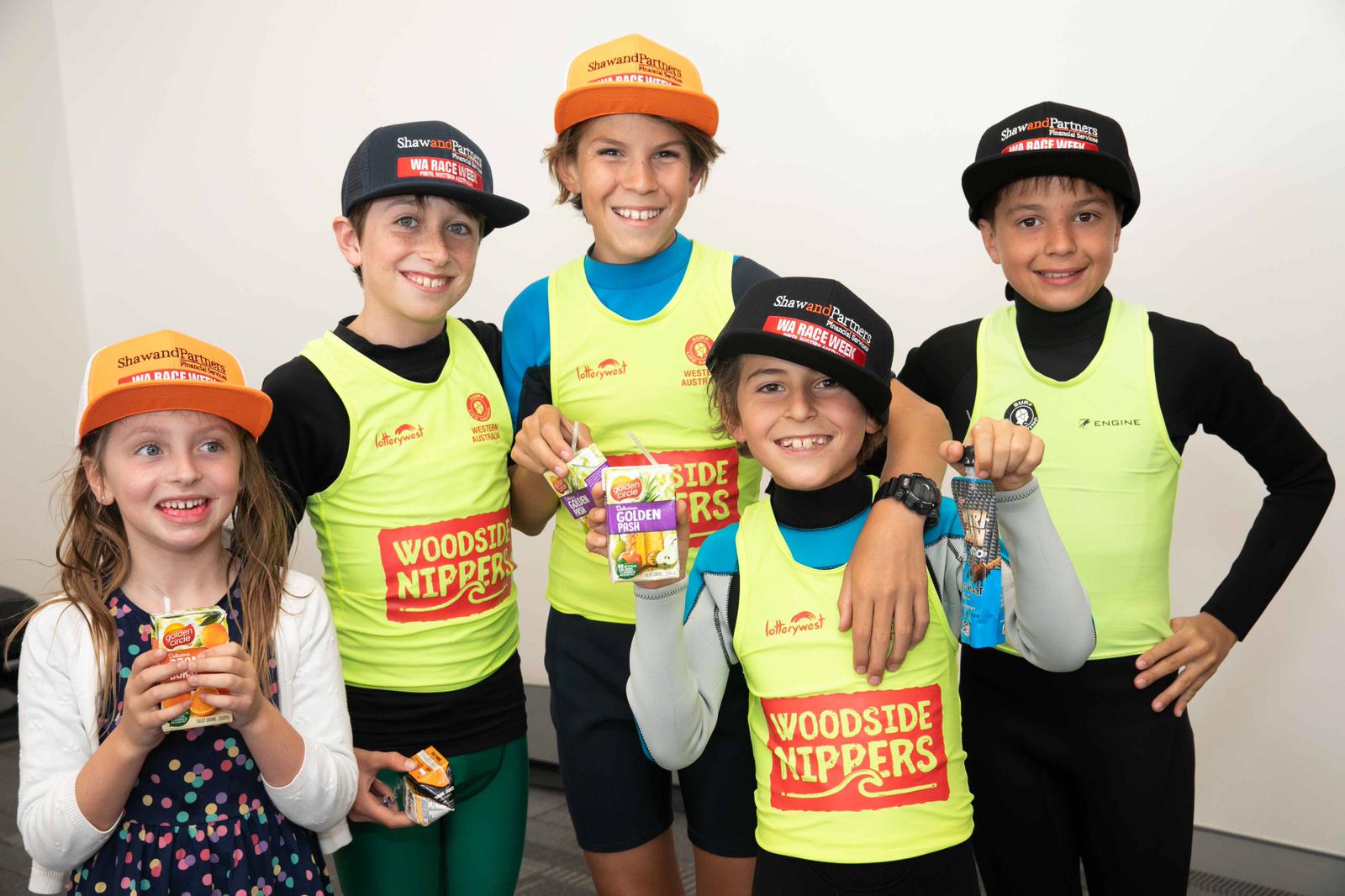
Written by Rob MousleyThe City of Perth Surf Club hosted a nippers’ clinic for more than 200 youngsters from all over Western Australia, as part of the Shaw and Partners WA Race Week here in Perth. Aside from getting to train with their heroes, the nippers walked away with lucky draw prizes to remind of a cracking day at the beach.
Additional Info
-
Content Part 2
…so excited
“I’ve done other clinics with the Iron Woman series,” said Mercer, “and the enthusiasm here is unparalleled. I hope that the ten of us have inspired them to stick with surf lifesaving, and to take it with them into later years – and the rest of their lives.”
A Q&A session followed by a lucky draw for sponsored merchandise wrapped up the event. “The kids were just so excited,” laughed Mercer.
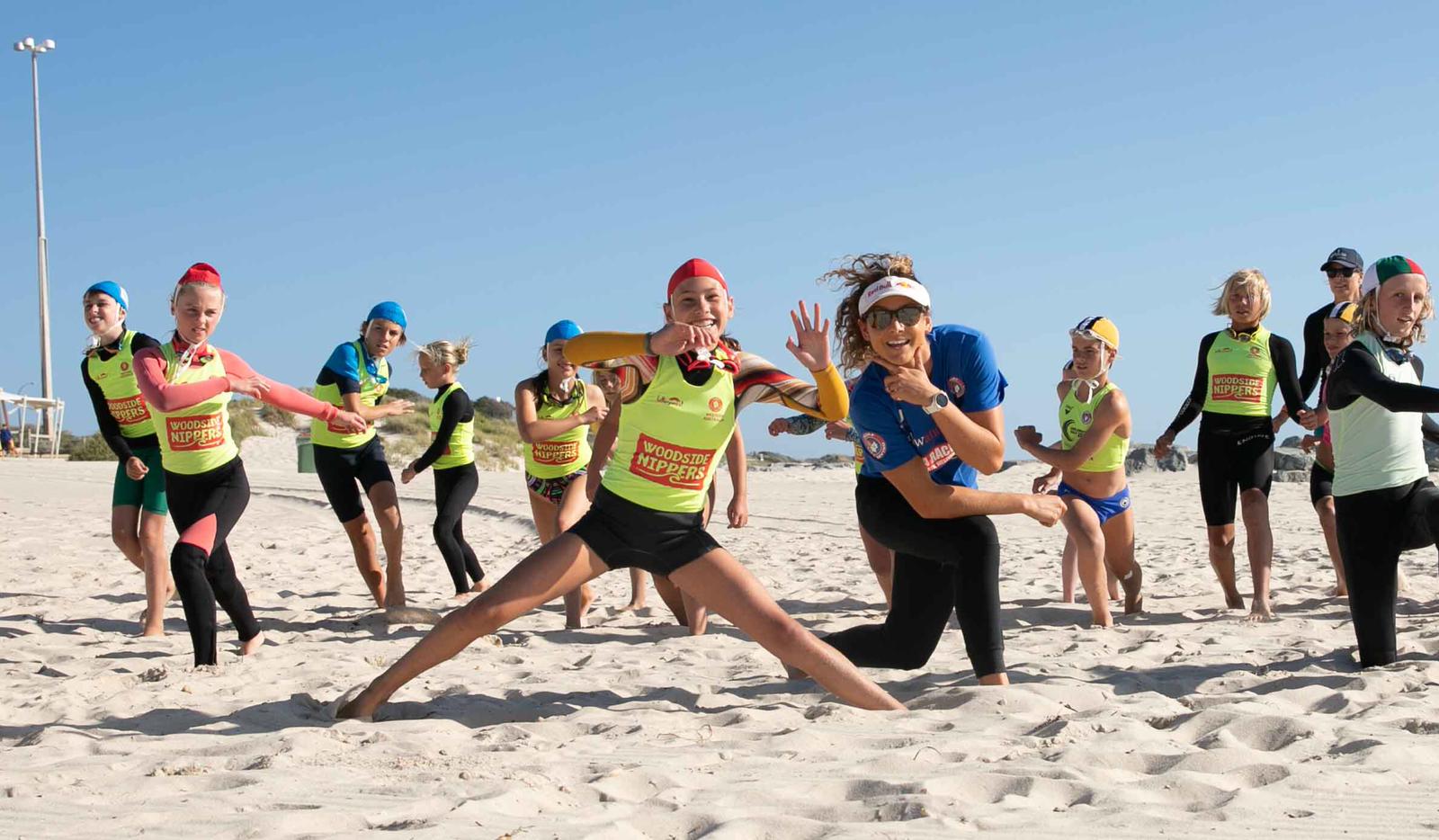
Shaw and Partners WA Race Week
The event was organized by Dean Gardiner of Ocean Paddler, and sponsored by Shaw and Partners as part of the Shaw and Partners WA Race Week.
Click here for more information on the Shaw & Partners WA Race Week
Hill and Nixon Consolidate at the Sunset Series, Perth
Written by Rob MousleySouth Africa’s Hayley Nixon managed to hold off Australian Iron Woman star Jemma Smith in a nail-biting finish at City Beach at the end of the first of two Sunset Series Races, part of the Shaw and Partners WA Race week here in Perth. In the men’s race, Cory Hill consolidated his lead in the week’s rankings, ahead of fellow Australian Tom Norton.
Additional Info
-
Content Part 2
Summary Results - Sunset Surfski Series Race 1
(Click here for the full results)
Men
Pos Name Time Time Behind Cat Gender Country Points Pace 1 Cory HILL 40:26.8 Male AUS 500 3:40 min/km 2 Tom NORTON 40:46.9 00:20.1 Male AUS 490 3:42 min/km 3 Jackson COLLINS 41:12.9 00:46.1 Male AUS 482 3:44 min/km 4 Sean RICE 41:31.1 01:04.3 Male GBR 476 3:46 min/km 5 Nicholas NOTTEN 41:43.7 01:16.9 Male RSA 472 3:47 min/km Women
Pos Name Time Time Behind Cat Gender Country Points Pace 42 Hayley-Jo NIXON 47:24.7 Female RSA 500 4:18 min/km 45 Jemma SMITH 47:35.5 00:10.8 Female AUS 490 4:19 min/km 49 Teneale HATTON 48:07.4 00:42.7 Female NZL 482 4:22 min/km 53 Jordan MERCER 48:18.1 00:53.4 Female AUS 476 4:23 min/km 54 Bonnie HANCOCK 48:24.5 00:59.8 Female AUS 472 4:24 min/km
Shaw and Partners WA Race Week
The race was the second event in the Shaw and Partners Race Week in Perth, Western Australia.
The week-long festival comprises:
- Sunday, 17 Nov: Fenn West Coast Downwinder
- Tuesday, 19 Nov: Ben Hewitt Sunset Surfski Series Race
- Thursday, 21 Nov: Ben Hewitt Sunset Surfski Series Race
- Friday, 22 Nov: The Shaw and Partners Dash for Cash
- Saturday, 23 Nov: The Shaw and Partners “The Doctor”
The $100,000 prize pool comprises:
- Shaw and Partners Dash for Cash: $15,000
- Shaw and Partners “The Doctor”: $50,000
- Shaw and Partners WA Race Week series overall: $35,000
Click here for the latest series points scores